

 English
 عربى
عربىA range hood that holds a strong, steady draft on its lowest, near-silent speed. A drone that stays airborne for half an hour on one battery. A ventilator whose airflow never drifts more than a few percent. All three depend on the same piece of engineering: the brushless DC (BLDC) motor. The conclusion comes first — BLDC motors dominate wherever a product needs quiet operation, precise electronic speed control, high efficiency and a long, maintenance-free life. That combination is why a technology that began in computer disk drives and printers now reaches nearly every category of modern hardware.
For anyone who buys or builds household and commercial appliances, the shift is intensely practical. Cooling fans, air coolers, heaters and range hoods — the everyday workhorses of indoor comfort — are exactly where the choice between a traditional single-phase AC motor and a DC solution shows up in electricity bills, noise measurements and warranty claims. What follows maps the main BLDC motor applications, explains why each field adopts them, and sets out a practical way to decide when brushless DC is worth its extra electronics, and when it is not.
What Makes a Brushless DC Motor Different
In a brushed motor, carbon brushes and a mechanical commutator physically switch current through the spinning windings. The arrangement works, but it consumes itself: brushes wear down, shed conductive dust and generate arcing that hums audibly and radiates electrical interference. A BLDC motor removes that mechanical switch altogether. Permanent magnets sit on the rotor, copper windings on the stator, and an electronic controller energizes the windings in sequence, tracking rotor position thousands of times per second — with Hall-effect sensors, or sensorless from the motor's own back-EMF.
Three practical results follow. First, efficiency: a well-engineered BLDC motor commonly converts 85–90% of input power into mechanical output, while small single-phase AC induction motors at appliance scale often sit far lower, losing much of their energy as heat. Second, service life: because nothing rubs, lifespan is set by bearings and insulation rather than brush wear, routinely passing 20,000 operating hours. Third, controllability: speed, torque and acceleration become software variables, so one platform can serve a whisper mode, three fan speeds and a soft start — flexibility a fixed-speed capacitor-run motor cannot offer.
In most household appliances, the motor is the single largest consumer of electricity — every point of motor efficiency flows straight onto the energy label and into the buyer's running cost.
Info: Hall-effect sensors report rotor position so the controller can switch windings at exactly the right moment. Sensorless designs read the back-EMF instead, trimming cost and wiring in fans and blowers where the load is predictable.
Where BLDC Motors Are Used: An Application Map
Brushless DC motors have spread across six broad fields, each adopting them for a slightly different reason. The table condenses that map into the applications engineers and buyers most often specify against.
| Application Field | Typical Products | Why BLDC Fits |
|---|---|---|
| Home appliances | Cooling fans, air coolers, range hoods, refrigerators, washing machines | Quiet variable speed, low running cost, energy-label compliance |
| Heating and ventilation | Fan-coil units, air purifiers, heat-pump and heater blowers | Constant airflow as filters load, multi-step or continuous control |
| Industrial automation | Servo drives, robot actuators, extruder and feed drives | Precise torque and positioning, continuous-duty reliability |
| Automotive and e-mobility | EV traction, coolant pumps, radiator fans, cabin blowers | High power density, no brush wear, native DC supply |
| Medical equipment | Ventilators, CPAP machines, surgical handpieces | Exact speed stability, low noise, high reliability |
| Personal and portable devices | Drones, cordless power tools, e-bikes | Best power-to-weight ratio, battery-friendly operation |
Two rows deserve a second look. Computer peripherals were the original high-volume proving ground, because brushed motors wore out too quickly inside a sealed device. And in heating and ventilation, electronic commutation lets a fan hold its programmed airflow even as filters clog and back-pressure climbs — a duty cycle that fixed-speed AC motors handle poorly, wasting power as resistance rises.
Inside the Appliance: Cooling Fans, Air Coolers, Range Hoods and Heaters
Household air-treatment appliances deserve a closer look, because this is where the BLDC-versus-AC decision is made every day, on tight margins and in front of users who can hear everything.
Cooling fans and air coolers
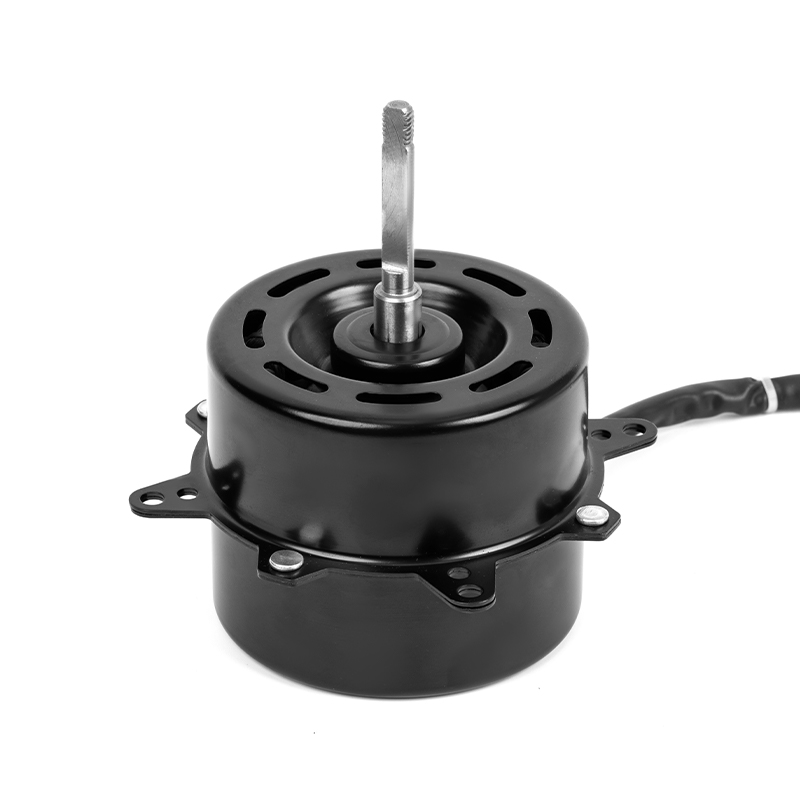
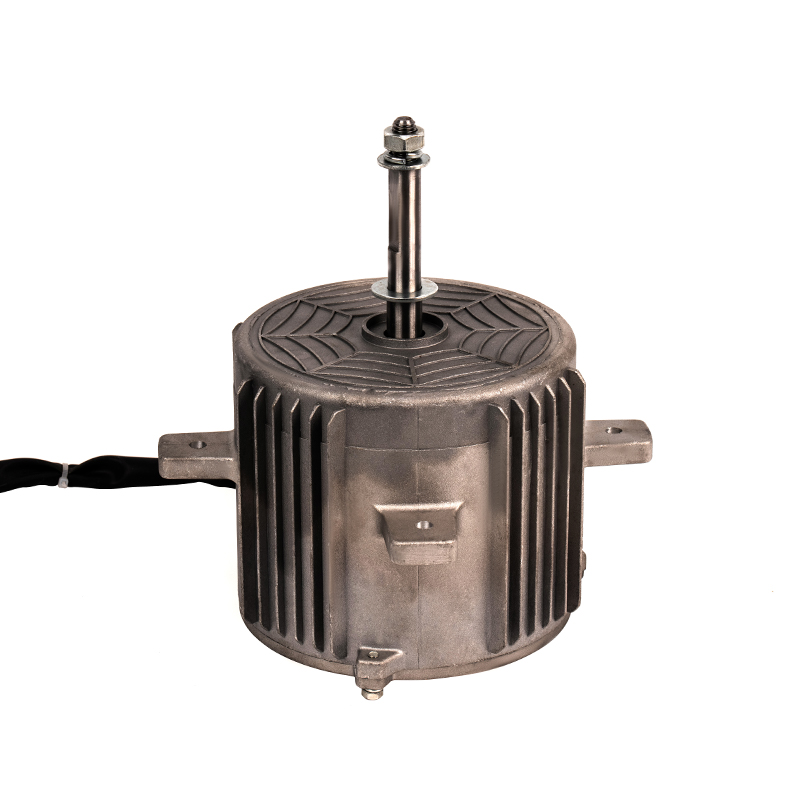
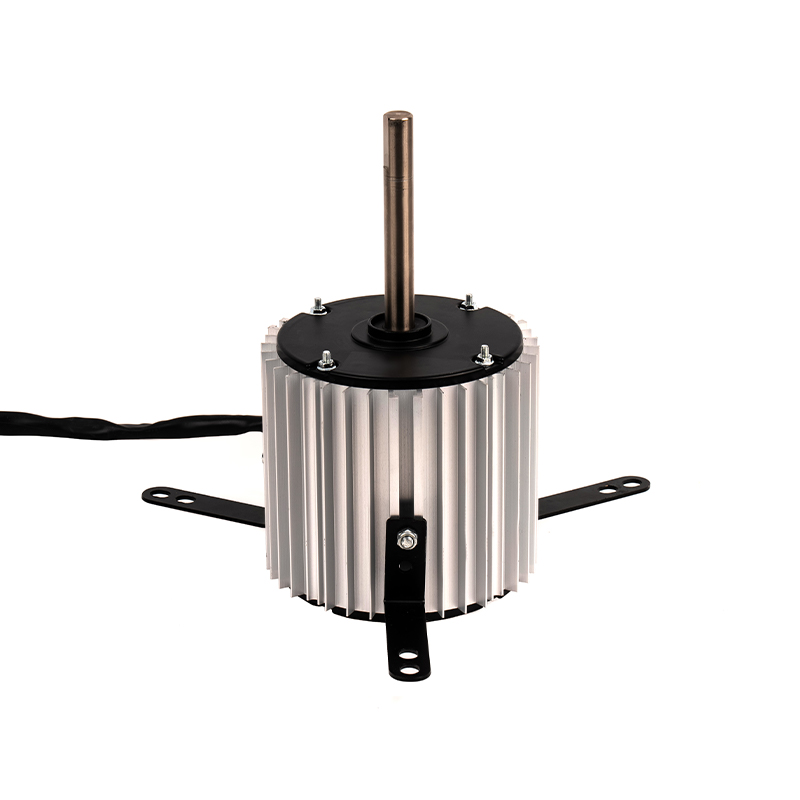
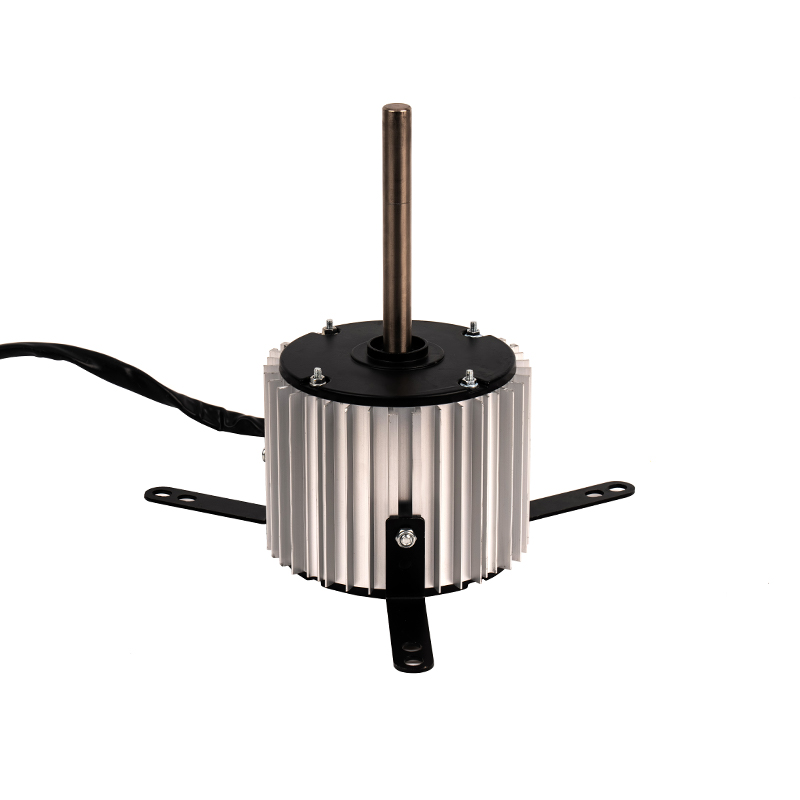
In a desktop cooling fan or a domestic air cooler, the motor runs for hours within a meter of the user's ears. A DC solution lets a designer offer genuinely quiet low speeds alongside efficient high ones; the traditional alternative, a single-phase capacitor-run asynchronous motor, remains cheaper per unit and thoroughly proven in continuous duty. For a working example of the DC path, look at how an air-cooler DC motor is specified for long-hour, filter-loaded operation:
Range hoods and heaters
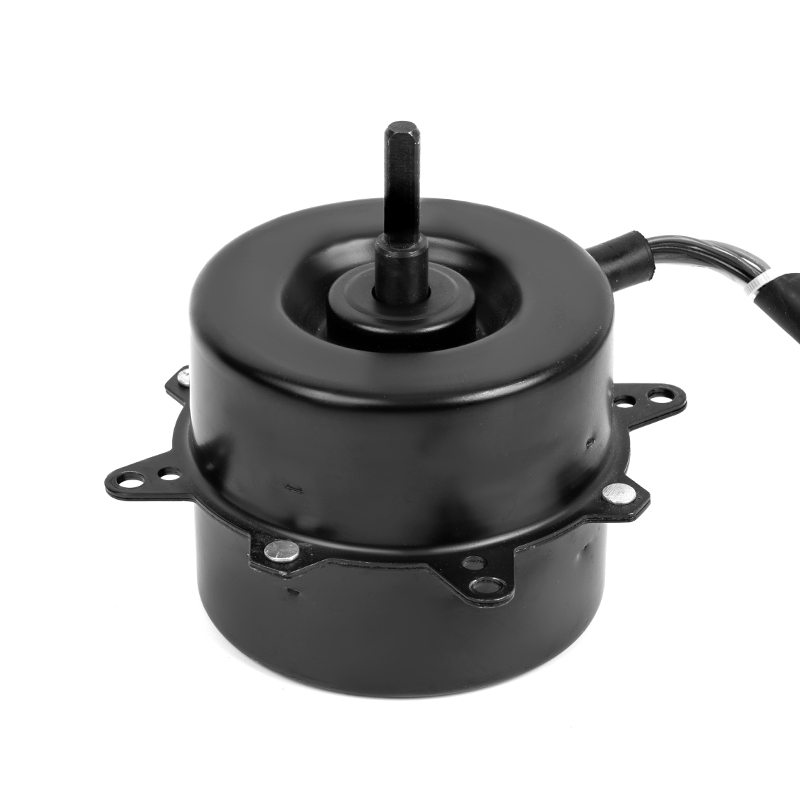
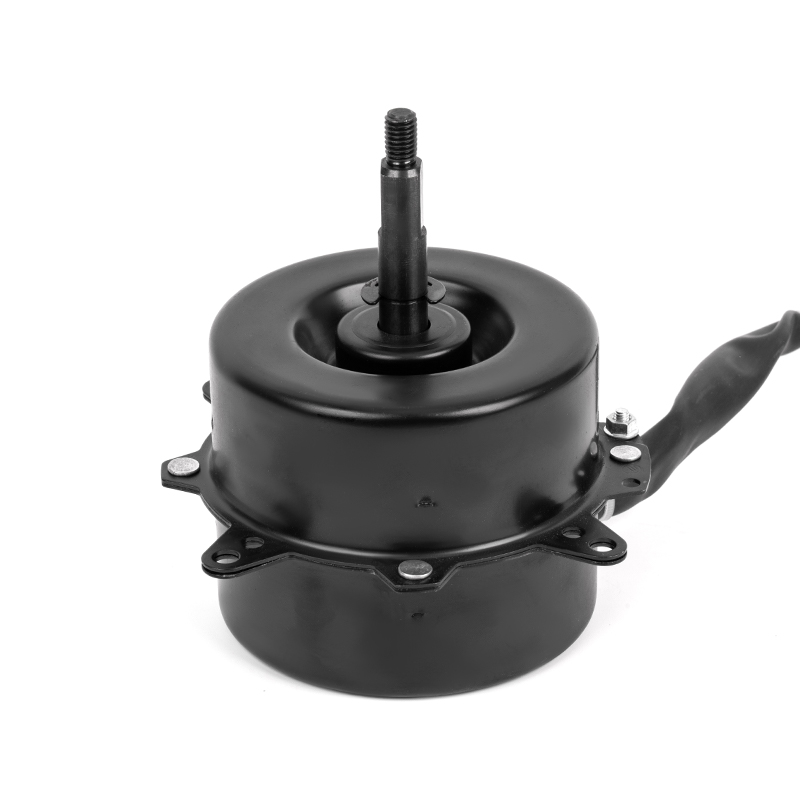
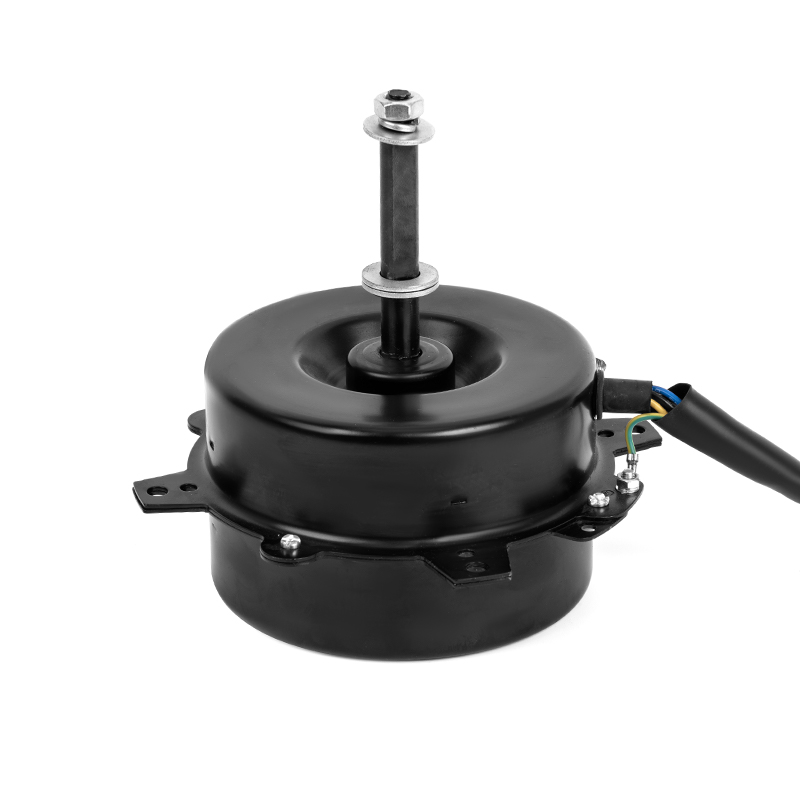
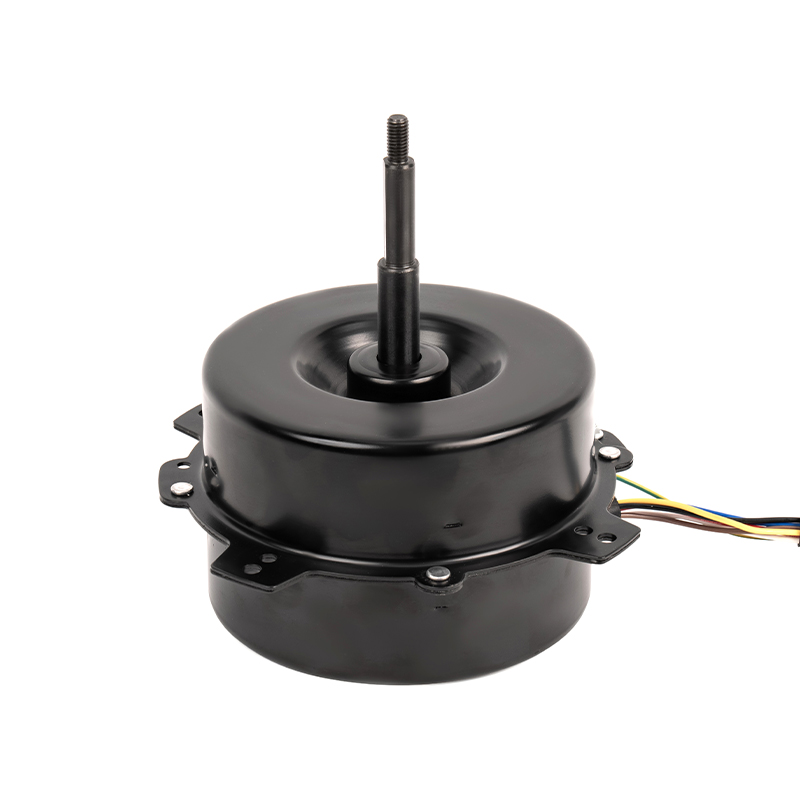
Range hoods tell the same story with sharper economics. A hood must build static pressure against ducting, grease and outdoor wind, and do it without drowning out dinner-table conversation. DC designs hold strong suction at moderate noise and step smoothly across speed levels, and the gain is well documented — see how a range hood DC motor improves energy efficiency compared with traditional AC motors. The hardware behind those numbers is easy to evaluate:
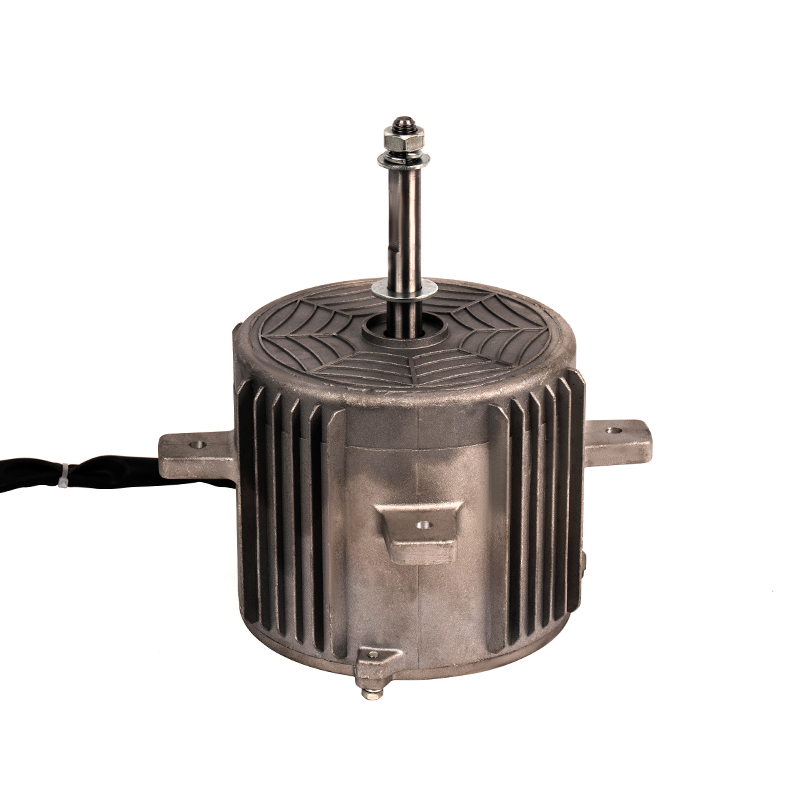 Compact DC Motors for Range HoodsBrushless DC motors built for kitchen extraction, where steady static pressure against ducting and grease must be maintained at moderate noise. The article highlights their efficiency and smooth multi-speed control, making them worth evaluating here.View Product →
Heaters follow a more conservative curve. In fan heaters and warm-air appliances, capacitor-operated one-way AC motors still carry most of the volume because the duty is largely fixed-speed. Brushless designs enter where modulation matters: variable heat output, draft-free low settings and connected, scene-based control.
Success: Appliance makers who move a ventilation line from AC to DC drive typically report 30–60% less fan energy at equal airflow — often enough to reach a better energy class and to advertise whisper-mode low speeds that customers actually use.
Choosing Between Brushless DC and Traditional AC Motors
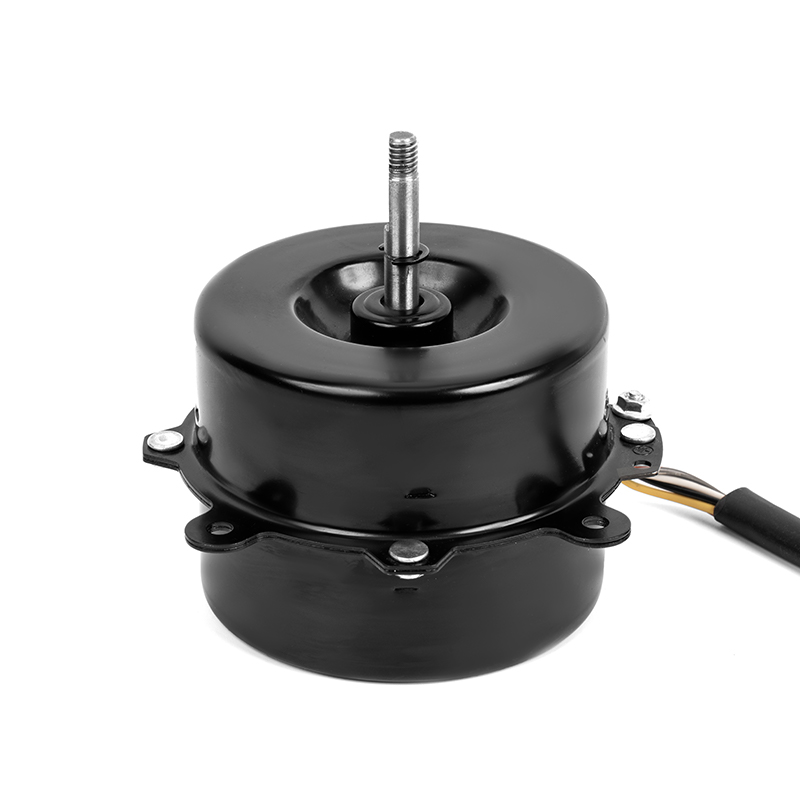
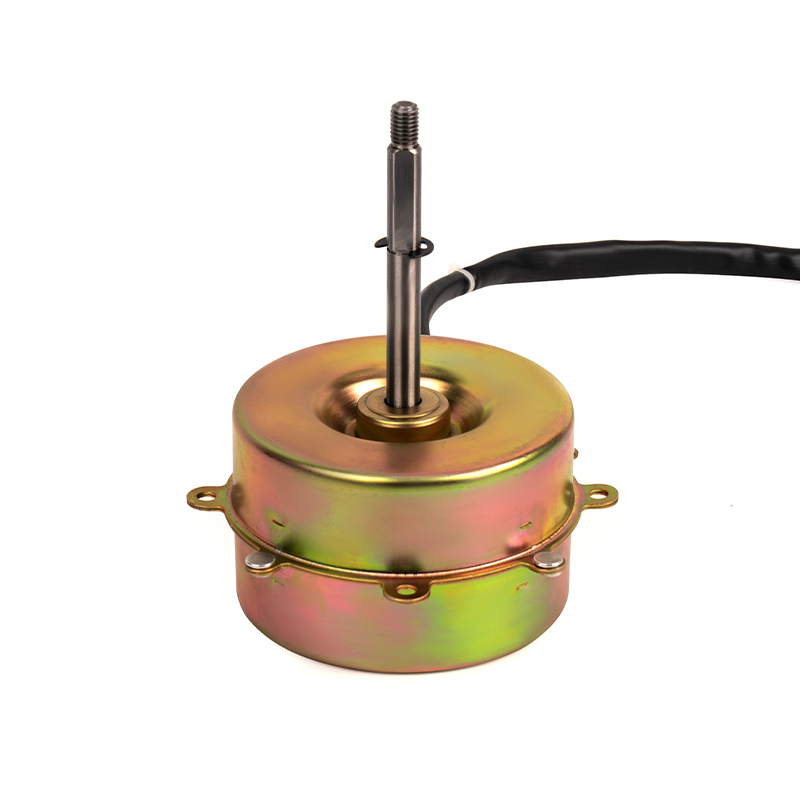
The decision is commercial as much as electrical. A BLDC motor is a system: motor, driver board, position sensing and control firmware. That adds components, a second supplier interface and electromagnetic-compatibility testing to the bill of materials. A single-phase AC capacitor-run motor needs a capacitor and little else — which is why it still dominates cost-driven, fixed-speed appliance lines, from basic cooling fans to the plastic-encapsulated oil-fume motors used in kitchen hoods, where the molded housing also shields the windings from grease and moisture.
Warning: In kitchen and industrial air, oil mist, humidity and chemical vapor attack windings and bearings over time. Whichever technology you choose, specify sealed bearings and appropriate winding encapsulation — then verify both with a real soak test, not just a datasheet claim.
The selection logic is simple. Brushless DC earns its premium when the product sells on:
- quiet low-speed operation, within earshot of the user;
- measurable efficiency and energy-label performance;
- continuous or multi-step speed modulation;
- battery-powered or low-voltage DC supply.
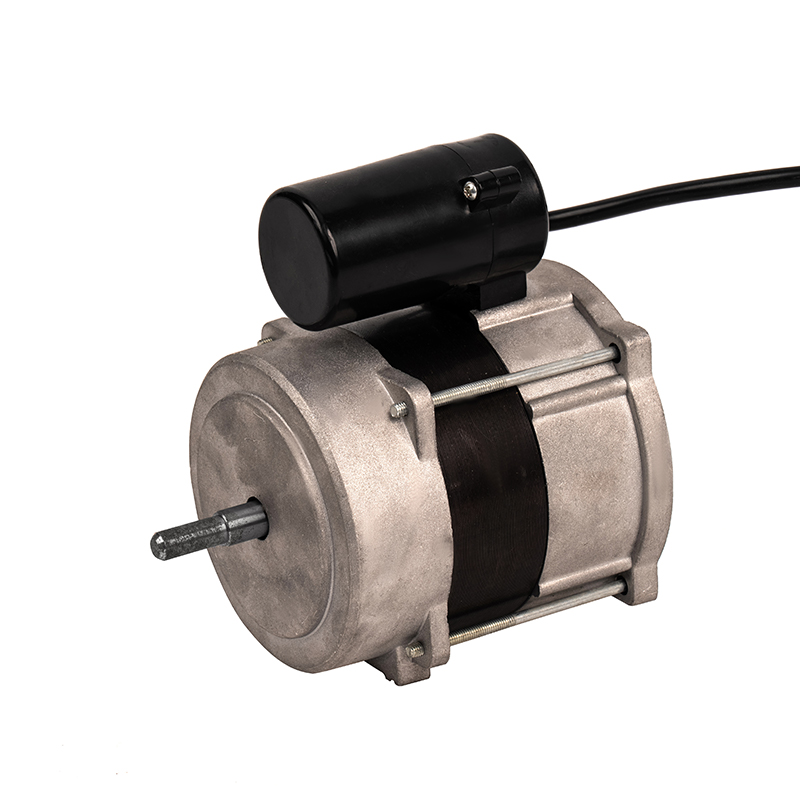
A single-phase AC asynchronous motor remains the pragmatic choice when the requirement is one fixed speed, the lowest possible unit cost and decades of field history. Many manufacturers hedge sensibly — AC on entry models, DC on mid-range and premium — and that hedging is easier when one supplier's catalog spans both families, for instance a DC motor range covering air coolers and hoods alongside the AC series:
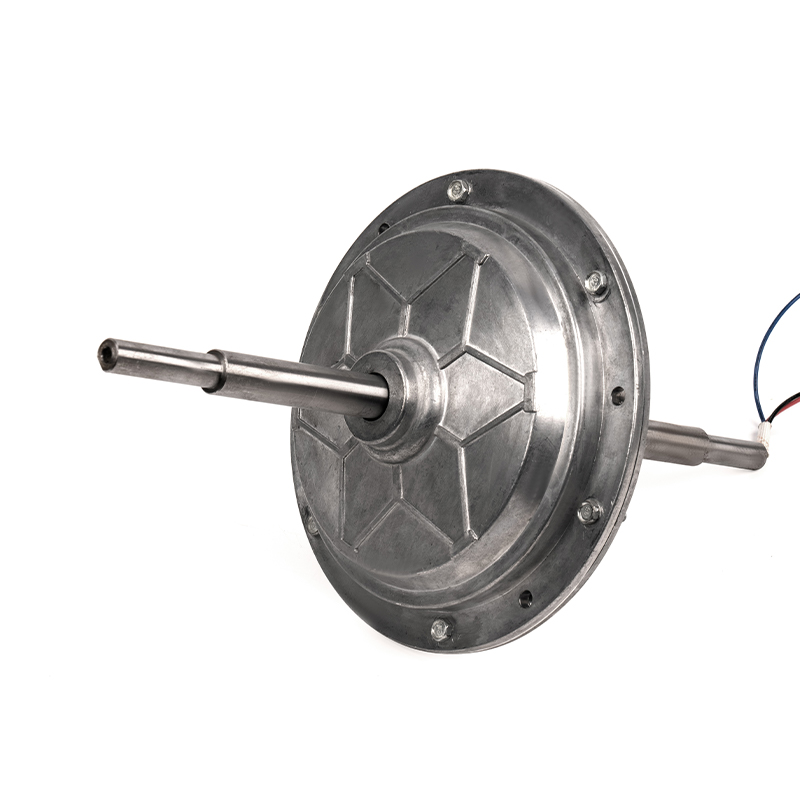 DC Motor Range Covering Air Coolers and HoodsA supplier catalog spanning DC motors for air coolers and range hoods alongside AC series, letting manufacturers hedge between fixed-speed AC on entry models and adjustable, efficient DC on mid-range and premium appliances.View Product →
Danger: Pairing a brushless motor with an undersized or mismatched driver is the fastest route to field failures — erratic startup, overheated power electronics and nuisance shutdowns that look like motor defects. Treat the motor and its controller as one matched pair in specification, testing and spare-part planning.
A Six-Point Checklist Before You Specify a Motor
Before a motor specification is signed, run the requirement through six questions. They take an afternoon to answer and prevent the most expensive surprises:
- Define the aerodynamic or mechanical duty first: required airflow and static pressure, or torque and speed across the full duty cycle.
- Decide how many speeds the product truly needs; one fixed speed rarely justifies driver electronics, while three or more speeds usually does.
- Count the hidden BLDC costs — driver board, position sensing, firmware and EMC testing — not just the motor price.
- Describe the environment honestly: ambient temperature, oil mist, humidity and dust, and ask exactly how insulation and bearings are protected.
- Confirm certification for the destination market, such as CCC and CQC for China, CE for Europe and UL for North America.
- Ask about customization from drawings or samples, daily production capacity and in-house test facilities, so ramp-up does not stall at validation.
That last point is easy to underestimate. Bench performance means little if the factory cannot hold tolerance at volume or re-verify a design after a change; supplier capability belongs inside the specification, next to the electrical data.
The direction of travel is clear: as driver electronics keep getting cheaper, brushless DC motors will keep absorbing applications that once belonged to brushed and AC induction designs — first in premium models, then in the mainstream. The single-phase capacitor-run asynchronous motor is not disappearing, though; for fixed-speed, cost-led appliances it remains the pragmatic, proven answer.
The strongest position for an appliance maker is therefore not loyalty to one technology but access to both, with honest advice about where each belongs. Working directly with an experienced small-power motor manufacturer that builds AC and DC families side by side makes it easier to match the right motor to each product line instead of forcing every design onto one platform. That match — not the motor alone — is what customers hear, feel and pay for, every single day.
 ++86 13524608688