

 English
 عربى
عربىSwitch on a desktop cooling fan and the blades spin smoothly, with no visible brushes or commutator. Inside is a small AC motor, most likely an induction motor. Instead of feeding current directly into the rotor, the motor creates rotor current by magnetic induction from the stator. That is the core of the induction motor working principle: a rotating magnetic field induces current in the rotor, and the interaction between those two fields produces torque.
What Is an Induction Motor?
An induction motor is an AC electric motor in which torque is produced by an electromagnetically induced rotor current. The stator is connected to the AC supply and sets up a rotating magnetic field. The rotor, normally a squirrel-cage rotor, has closed circuits in which the changing field induces a voltage. Because current flows in the rotor without any direct electrical contact, the motor needs no brushes, no slip rings, and no permanent magnets.
Since the induced current depends on relative motion between the rotor and the stator field, the rotor cannot turn at exactly synchronous speed. The speed difference is called slip. That is why the induction motor is also described as an asynchronous motor. For a broader overview of motor families, review the main categories of motors.
Stator and Rotor: The Two Basic Parts
Every induction motor has two active components. The stator is a stationary core made of thin laminated steel sheets, with copper or aluminum windings placed in slots. Single-phase motors typically use a main winding plus an auxiliary winding. Three-phase motors use three windings spaced 120 degrees apart. When AC power is applied, the windings create a rotating magnetic field that crosses the air gap.
The rotor is the rotating part. The most common construction is the squirrel-cage rotor, where aluminum or copper bars are embedded in a laminated core and short-circuited by end rings. This gives the motor a simple, robust body with nothing to wear out in the rotor circuit. For small appliances, the simplicity of the squirrel-cage rotor is one of the main reasons induction motors last a long time.
How the Induction Motor Working Principle Produces Torque
Faraday's law says that a changing magnetic field induces a voltage in a conductor. In the induction motor, the stator's rotating field sweeps across the rotor bars. The conductors see a changing flux, so a voltage is induced. Since the bars are short-circuited through the end rings, current flows in the rotor.
According to Lenz's law, the induced current creates a magnetic field that opposes the change which caused it. That opposition results in a mechanical force on the rotor bars. The force is applied tangentially, and the motor begins to turn. In simple terms, the rotor is continuously chasing the stator field.
Why the Rotor Never Catches the Field
If the rotor reached synchronous speed, the stator field and rotor would move together. There would be no relative motion, no induced voltage, no rotor current, and no torque. Therefore the rotor always runs a little slower than the rotating field. This small speed difference is what allows the induction motor to keep producing torque.
Synchronous Speed and Slip
The speed of the stator's rotating field is called synchronous speed. For a given AC frequency and number of poles, it is calculated as Ns = 120f / P, where f is the line frequency in hertz and P is the number of poles. At 50 Hz, a 2-pole field rotates at 3000 rpm, and a 4-pole field rotates at 1500 rpm. At 60 Hz, the speeds are 3600 rpm and 1800 rpm respectively.
| Number of poles | 50 Hz | 60 Hz |
|---|---|---|
| 2 | 3000 rpm | 3600 rpm |
| 4 | 1500 rpm | 1800 rpm |
| 6 | 1000 rpm | 1200 rpm |
Slip is defined as s = (Ns - Nr) / Ns, where Nr is the actual rotor speed. At no load, slip is very small. At full load, a typical small motor may have a slip of 3 to 6 percent. If slip were zero, the rotor would have no reason to turn because no current would be induced. That is why an induction motor, by definition, always runs slower than the rotating field.
Single-Phase and Three-Phase Induction Motors
Three-phase induction motors are self-starting because the three sets of windings naturally generate a rotating magnetic field. They are widely used in industrial pumps, compressors, and conveyor drives. The efficiency and power density of these motors are high, and speed control can be added with a variable frequency drive.
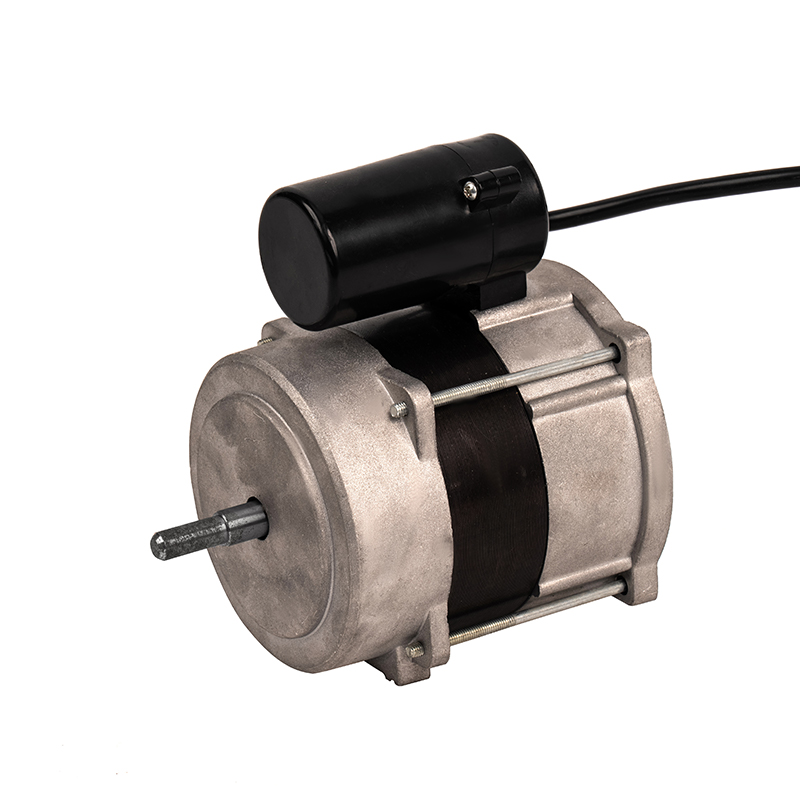
Single-phase induction motors are different. With only one winding, the stator field pulsates along one axis instead of rotating, so the rotor cannot start by itself. The standard solution is to add an auxiliary winding and a capacitor to create a phase shift. In a single-phase capacitor-run motor, the capacitor remains in the circuit during both starting and running, which improves torque and efficiency.
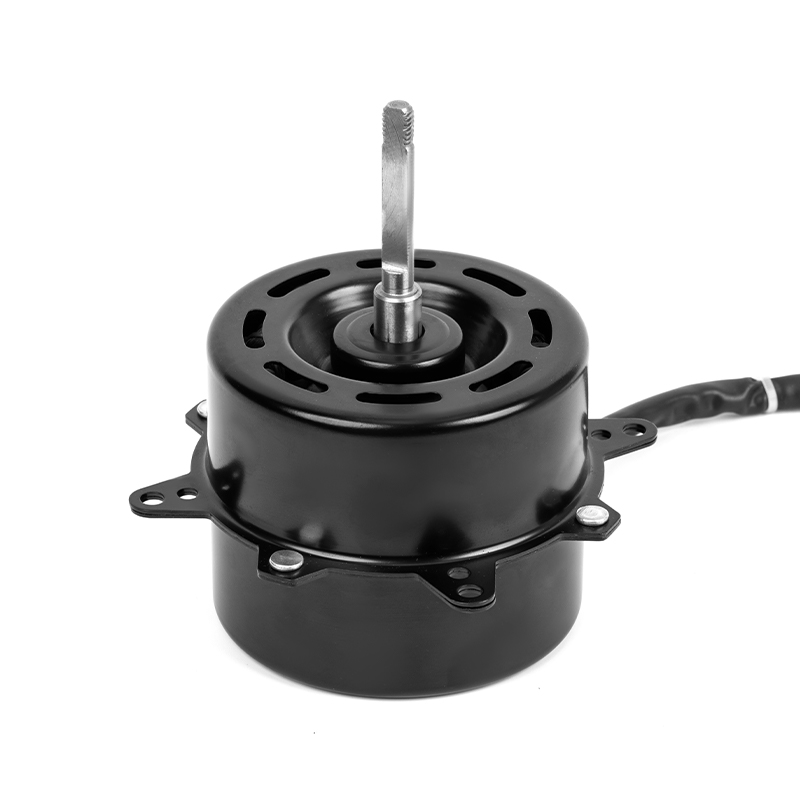
This design is common in cooling fans and air-mover appliances. A typical example is a desktop aluminum-shell cold air AC motor that uses a capacitor-run winding to deliver steady rotation in a fan assembly.
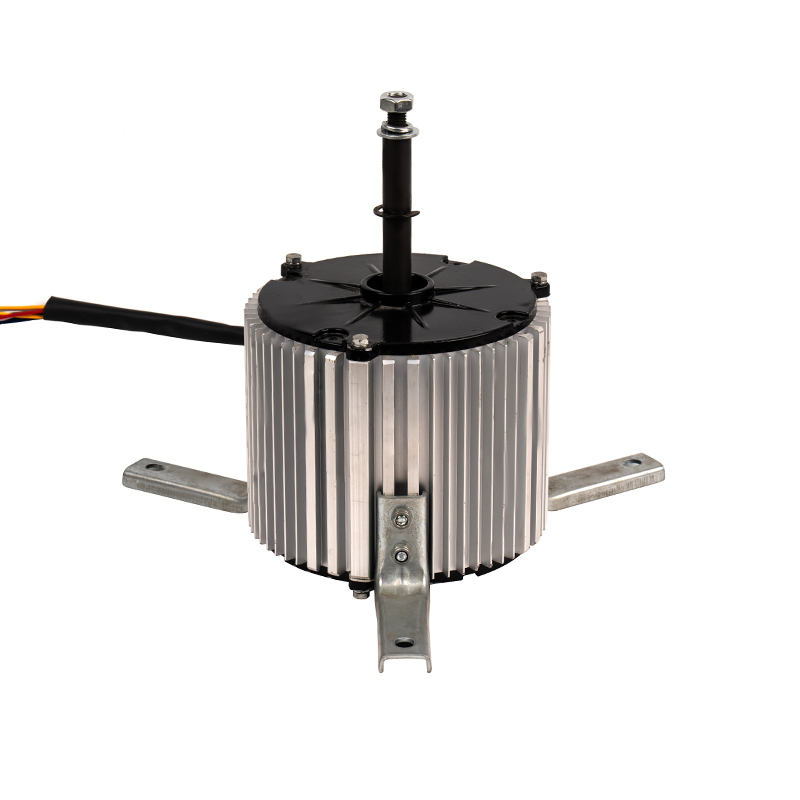 Wholesale YSY-1500-4 desktop aluminum shell cold air AC motor, 1500W Suppliers, Shengzhou Miduo Eletric Appliance Co., Ltd. is China wholesale YSY-1500-4 desktop aluminum shell cold air AC motor, 1500W factory and YSY...View Product →
Where You Find Induction Motors in Everyday Appliances
Cooling fans, air coolers, heater fans, range hoods, and dehumidifiers are typical applications. The induction motor working principle gives these products a low-cost, dependable way to turn a fan or blower from standard AC power. Because the rotor is simple and brushless, the main wear items are bearings and insulation, not the electrical circuit.
Heater Fans
Heater fan applications place a higher demand on continuous airflow. A heater motor must handle a warm airstream and a steady thermal load from the heat exchanger. For this reason, many heater products use a capacitor-operated heater motor to keep the fan speed stable during long running cycles.
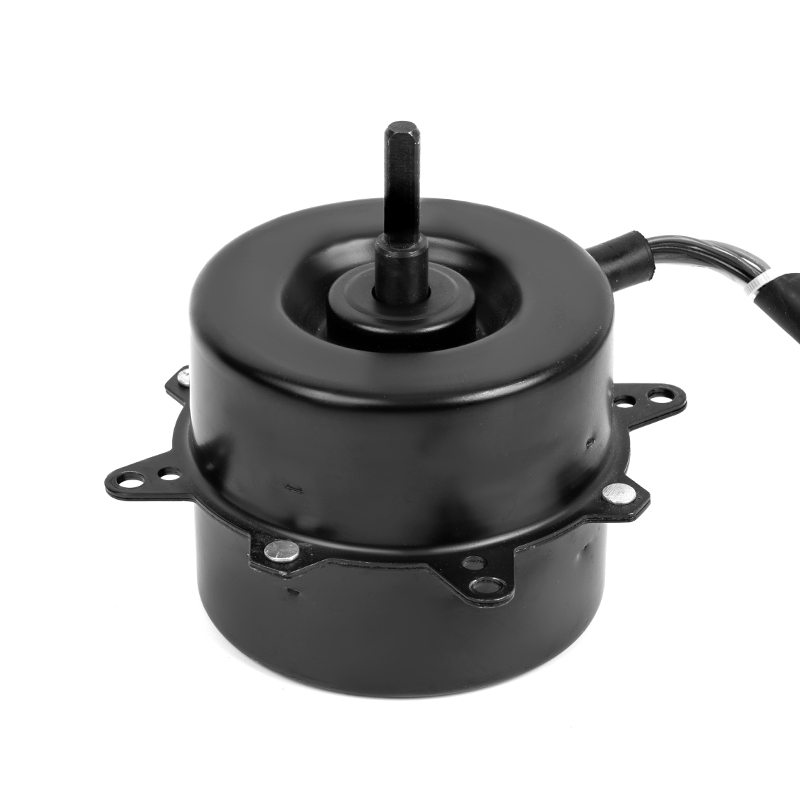
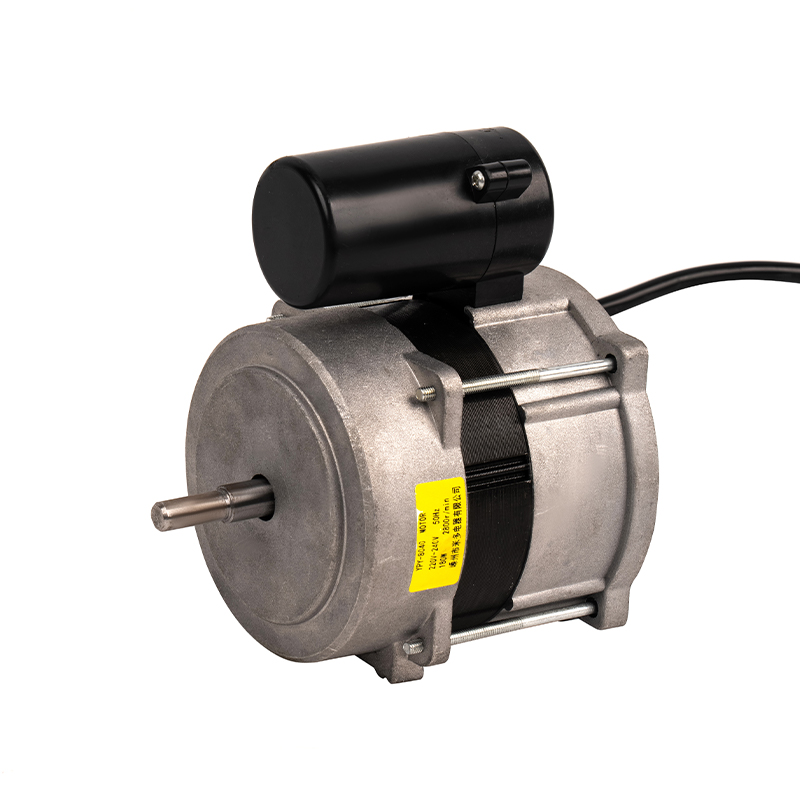 Wholesale YPY-8040 capacitor operation heater motor, 2800RPM Suppliers, Factory Shengzhou Miduo Eletric Appliance Co., Ltd. is China wholesale YPY-8040 capacitor operation heater motor, 2800RPM factory and YPY-8040 ca...View Product →
Range Hoods
Kitchen range hoods face grease, humidity, and cleaning chemicals. A plastic encapsulated oil fume AC motor is often preferred in that environment because the sealed plastic housing keeps oil and moisture away from the motor windings. It is a practical example of how the basic induction motor design can be adapted to a demanding appliance duty.
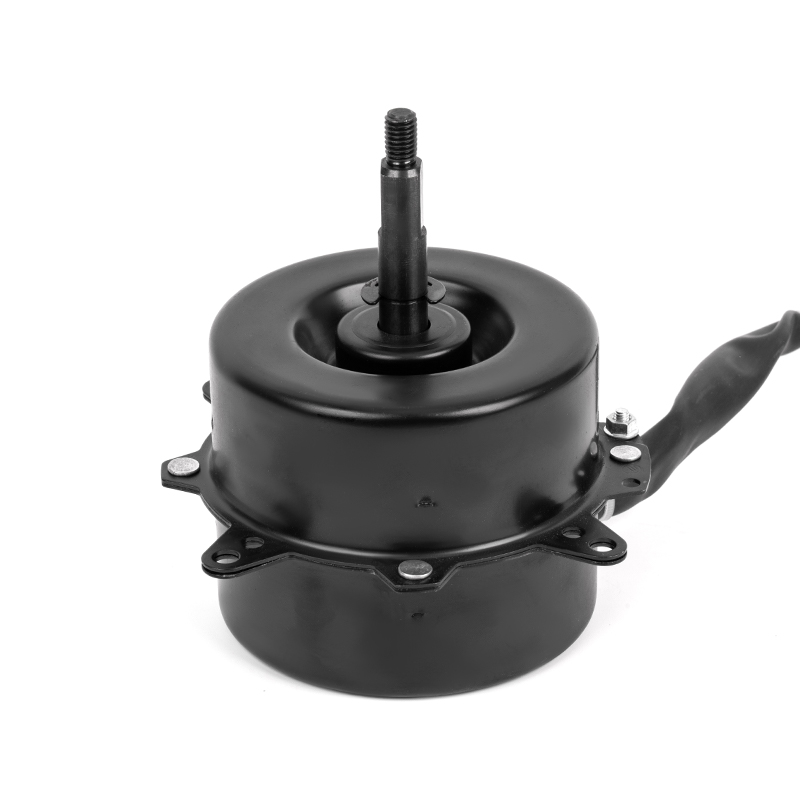
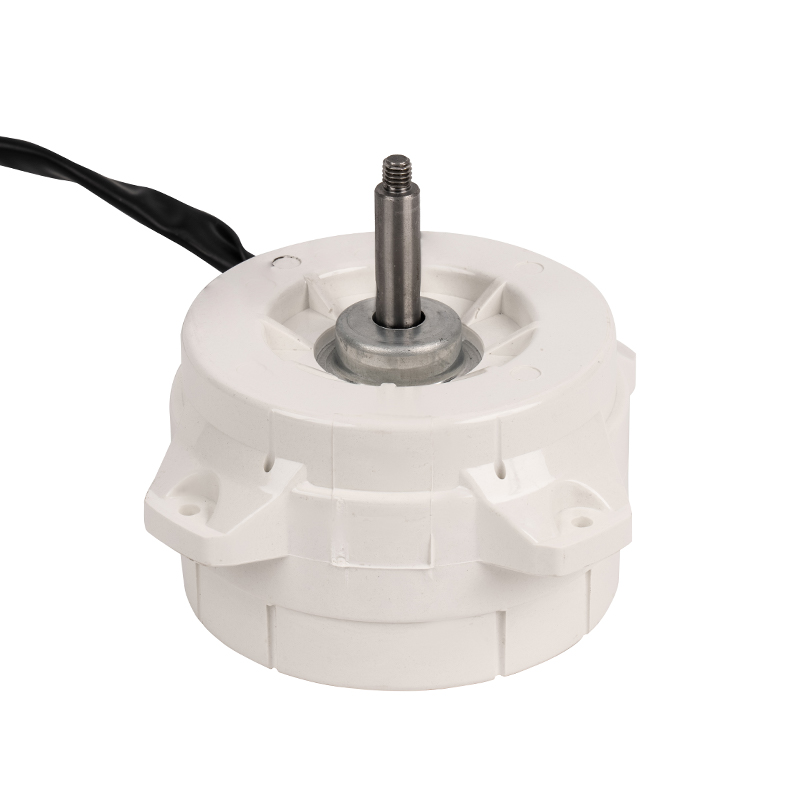 Wholesale YYS120-4 plastic asynchronous motor Suppliers, Factory - Shengzhou MidShengzhou Miduo Eletric Appliance Co., Ltd. is China wholesale YYS120-4 plastic asynchronous motor factory and YYS120-4 plastic asynchron...View Product →
What to Check When Selecting a Small Induction Motor
When choosing a motor for a new appliance, start with the application, then verify the electrical and mechanical details. The working principle explains the basics, but the final product depends on manufacturing quality and component selection.
- Rated voltage and frequency: confirm whether the motor is designed for 110 V / 60 Hz, 230 V / 50 Hz, or a dual rating.
- Rotor speed and pole count: check the no-load speed and the rated speed under load, and compare the slip against your application target.
- Capacitor type and size: the capacitor affects starting torque, running efficiency, and heat rise. Use the value specified by the motor designer.
- Bearing and insulation: choose bearing quality and insulation class according to the operating temperature and expected service life.
- Certifications and testing: confirm the motor complies with the electrical safety and performance standards required in your target market.
Test the motor in the complete appliance. Measure temperature rise over a few hours, listen for abnormal noise, and verify that the speed stays stable under load. If you are comparing options from a motor supplier, ask for measurements and dimensional drawings rather than relying only on catalog data.
The induction motor working principle is straightforward: a rotating stator field creates an induced rotor current, and slip keeps that current alive. The result is a simple, brushless motor that can serve reliably in fans, blowers, and household appliances for years. Understanding these basics helps you select the right motor and ask the right questions during supplier evaluation.
 ++86 13524608688