

 English
 عربى
How an AC Motor Works — and Why Slip Decides Almost Everything
The rotor never catches the magnetic field that drives it. That shortfall explains rated speed, torque, heat, capacitor failures, and most of the numbers stamped on a nameplate.
A tachometer on a 50 Hz fan motor stamped 1,300 rpm reads close to that figure whether the blade is clean or coated in dust, and it rises only slightly when the airflow is blocked. Fit the same motor behind a heavier impeller and the speed barely moves while the current climbs. Both behaviours come from one mechanism.
An AC motor works by producing a magnetic field that travels around the stator at a speed set by supply frequency and pole count, then dragging the rotor along a few percent behind it. Torque exists only while the rotor lags. Let the rotor match the field exactly and there is no relative motion, no induced current, and no torque at all.
Hold on to that idea and several everyday arguments get shorter: why nameplate speeds are odd numbers, why a single-phase motor hums instead of starting when a capacitor dries out, and why the same frame runs hotter in a heater than in a fan.
The Rotating Field, Step by Step
In a three-phase motor, three windings sit 120 electrical degrees apart and carry currents offset by the same angle. Their fields add into a single field of constant strength that rotates once per electrical cycle. That is the synchronous speed: Ns = 120f ÷ P, with f in hertz and P the number of poles.
- The stator current builds a field that sweeps past the rotor bars.
- Because the bars move relative to that field, voltage is induced in them, so the rotor behaves as a short-circuited secondary.
- The induced currents make their own field, which the stator field pushes against, and the rotor accelerates in the same direction.
- Under load the rotor approaches synchronous speed but never reaches it. The gap is slip: s = (Ns − Nr) ÷ Ns.
- Torque rises with slip up to breakdown torque, then falls — which is why an overloaded motor stalls rather than simply slowing down.
Full-load slip is usually 2–6% in small general-purpose motors. Fan motors deliberately run higher, often 8–15%, because a flatter torque curve keeps airflow steady as filters clog and blades load up.
Where the Parts Sit, and Where the Heat Comes From
The stator is a stack of thin silicon-steel laminations, insulated from one another to limit eddy currents, with enamelled copper windings pushed into slots. The rotor is a cage of die-cast aluminium or copper bars shorted by end rings. Air gaps in small motors run about 0.25–0.5 mm, and that gap is where energy transfer happens: any eccentricity there shows up as vibration and noise.
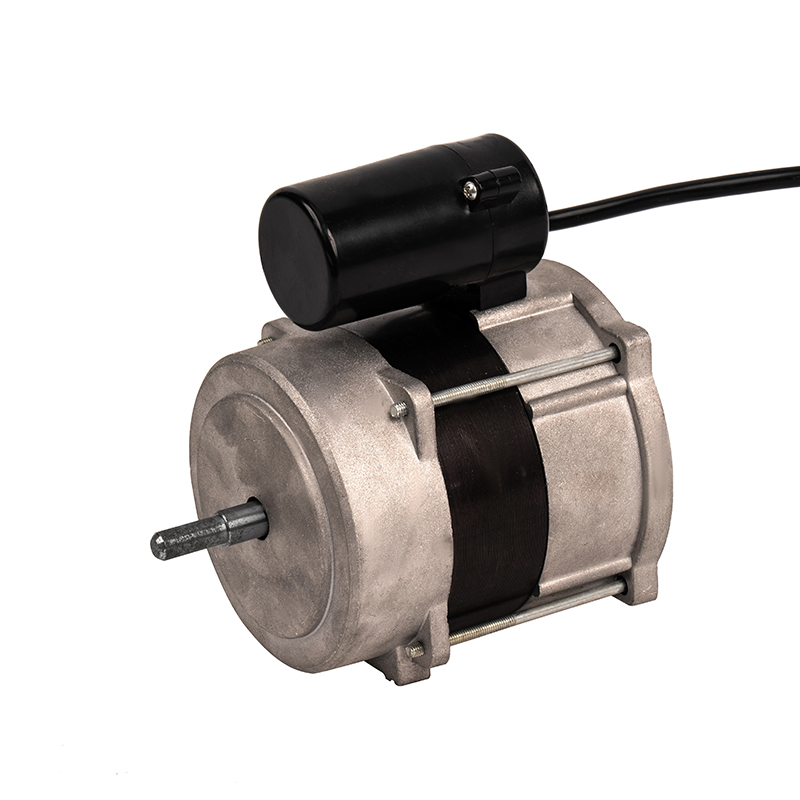
A capacitor-run single-phase motor adds a second winding and a film capacitor; a three-phase motor has no capacitor at all. Bearings, usually sealed ball bearings in fan duty, account for a large share of service life.
Slip is not a defect to be engineered away. It is the working clearance between the field and the shaft — close it completely and the motor produces nothing.
Losses leave as heat: resistance in both windings, core loss in the laminations, friction and windage at the bearings. Small single-phase motors often land at 30–60% efficiency, which is why a 45 W shaft output can pull close to 90 W from the wall, and why housing material and airflow matter as much as the winding itself.
Why a Single-Phase Motor Cannot Start on Its Own
One winding fed with single-phase current produces a pulsating field, not a rotating one. It resolves into two fields spinning in opposite directions at the same speed. At standstill they cancel exactly, so net torque is zero and the rotor only hums.
- Shaded pole: a copper ring on part of each pole delays flux and yields a small starting torque — cheap, quiet, inefficient, common on small fans.
- Resistance split-phase: a high-resistance auxiliary winding shifts phase; a centrifugal switch or PTC removes it after starting.
- Capacitor-start: a large electrolytic capacitor delivers high starting torque for pumps and compressors.
- Capacitor-run, or permanent split capacitor: a small film capacitor stays in circuit, lifting power factor and cutting noise, at the cost of modest starting torque.
Fans use capacitor-run designs because the load at start is light. A typical run capacitor is a few microfarads of metallised film. As it loses capacitance — heat is the usual cause — starting torque falls, the motor draws more current for the same output, and the winding runs hotter. If a motor hums and the thermal protector keeps tripping, measure the capacitor first; the run capacitor's effect on starting torque and running efficiency is usually the whole story.
Reading Speed and Slip From a Nameplate
Nameplate rpm is full-load speed at rated voltage, not free-running speed. Set it against synchronous speed and you can read the designer's intent.
| Poles | Sync, 50 Hz | Typical full load, 50 Hz | Sync, 60 Hz | Typical full load, 60 Hz | Usual duty |
|---|---|---|---|---|---|
| 2 | 3,000 | 2,750–2,850 | 3,600 | 3,300–3,450 | Heater blowers, high-speed fans |
| 4 | 1,500 | 1,300–1,450 | 1,800 | 1,550–1,700 | Cold-air fans, range hoods |
| 6 | 1,000 | 900–950 | 1,200 | 1,050–1,140 | Large slow fans, air coolers |
| 8 | 750 | 650–720 | 900 | 780–850 | Low-noise, large-diameter fans |
So 1,300 rpm at 50 Hz means a four-pole motor running around 13% slip — high on purpose, so that a dusty blade does not swing the airflow. A 2,800 rpm heater motor is two-pole at roughly 7% slip; 920 rpm points to six poles.
InfoTwo motors can share a frame, a shaft diameter and a capacitor value and still be 200 rpm apart. Confirm measured current at rated load rather than trusting the stamp alone.
Matching the Motor to the Appliance
Appliance duty cycles decide the motor class more reliably than rated wattage does.
| Appliance | Typical motor | Spec that decides success | Common sourcing risk |
|---|---|---|---|
| Cold-air fan, evaporative cooler | Single-phase capacitor-run, 4-pole | Speed stability at low voltage, bearing noise | Shaft length and shell fit against the blade hub |
| Fan heater | 2-pole capacitor-operated, one-way rotation | Insulation class, temperature rise | Winding overheating when airflow is restricted |
| Range hood | Plastic-encapsulated single-phase, or DC | Noise at the low tap, grease resistance | Capacitor drift, moisture ingress |
| Air cooler | Capacitor-run AC or DC | Continuous-duty thermal margin | Loss of motor cooling in high ambient |
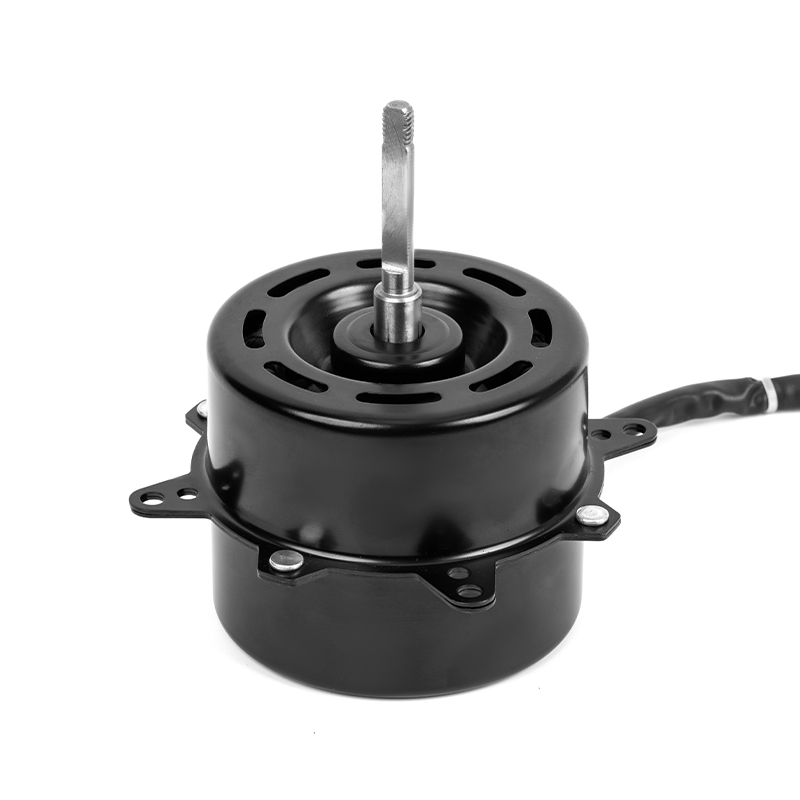
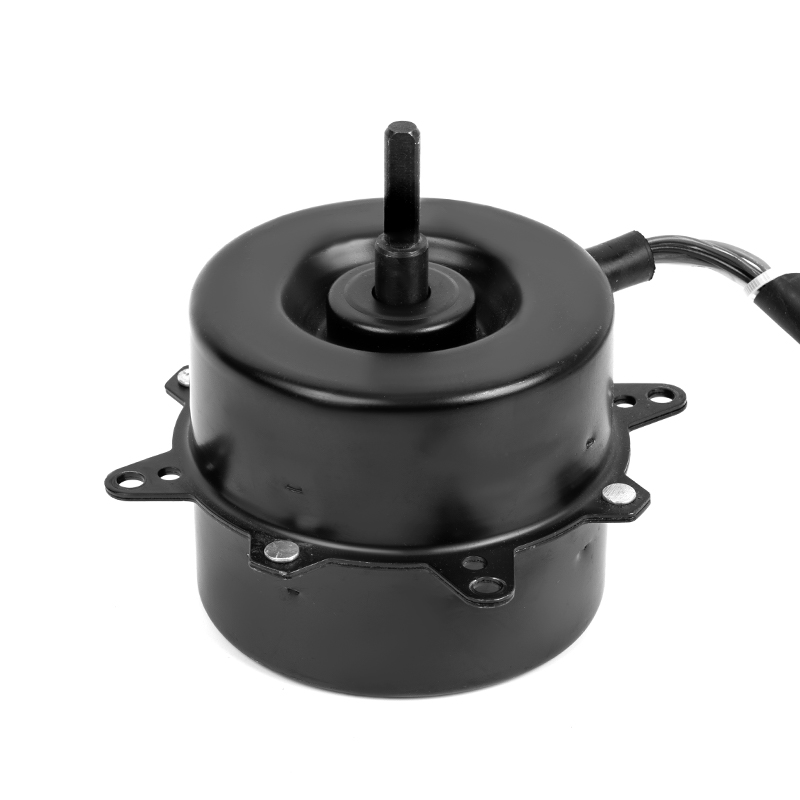
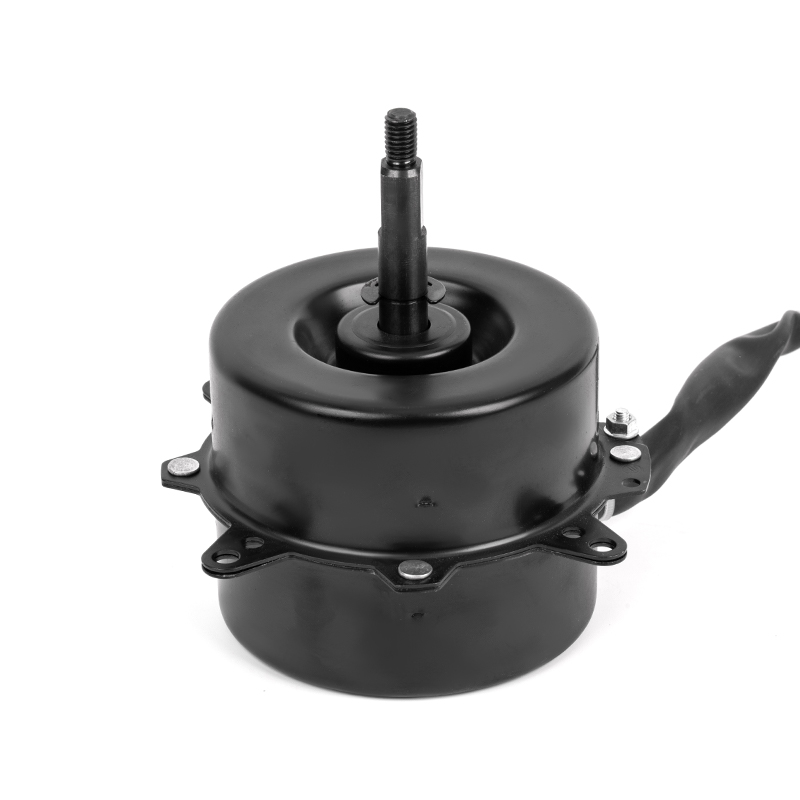
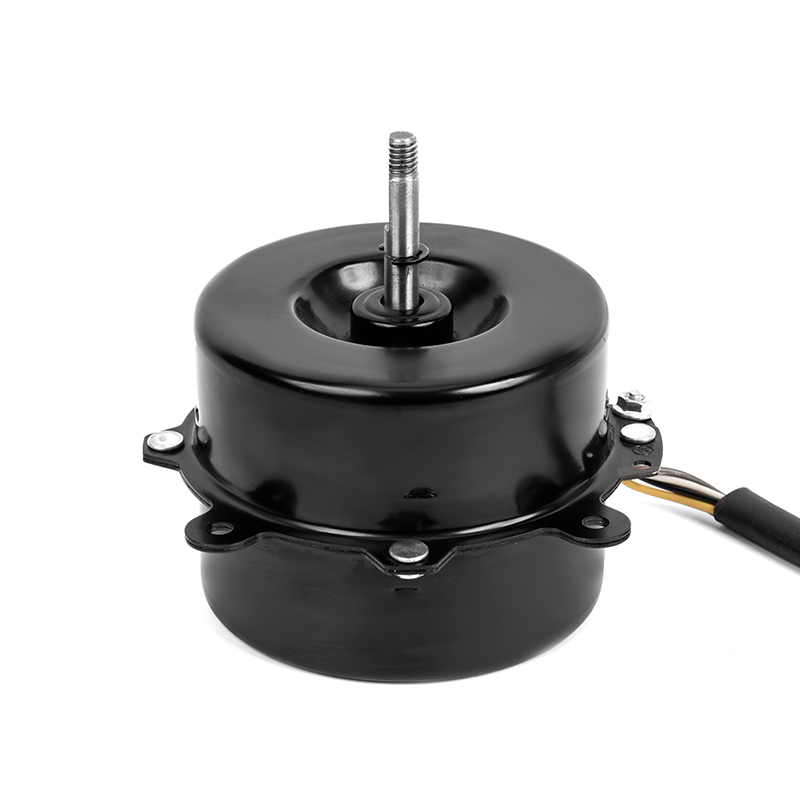
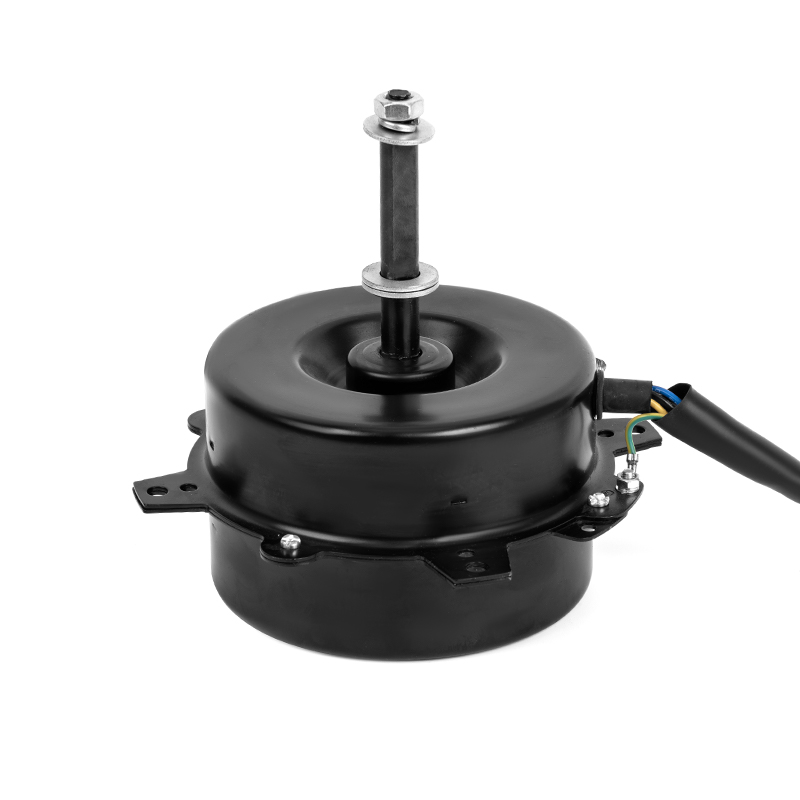
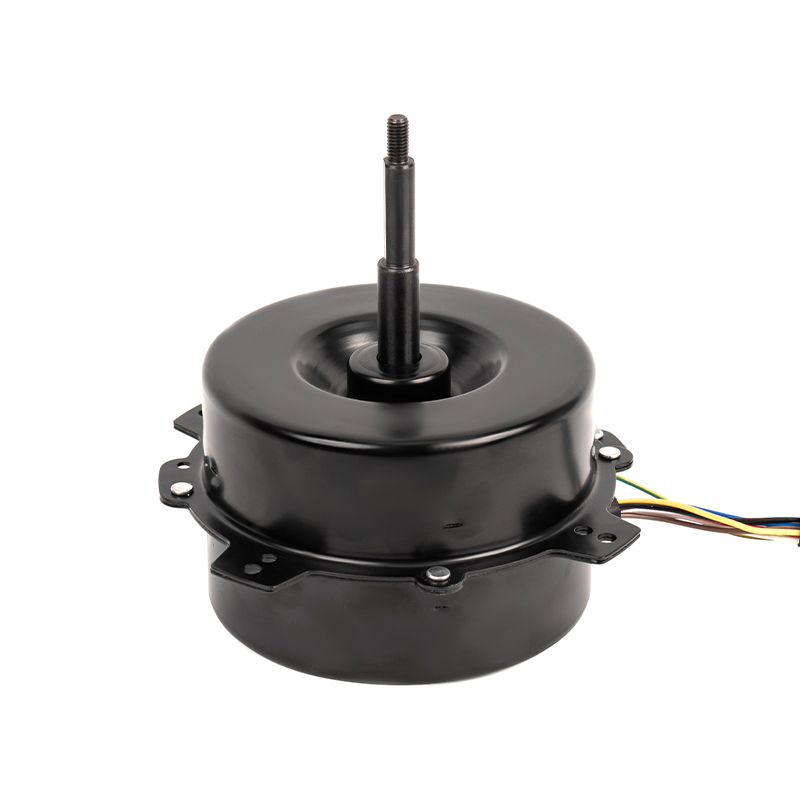
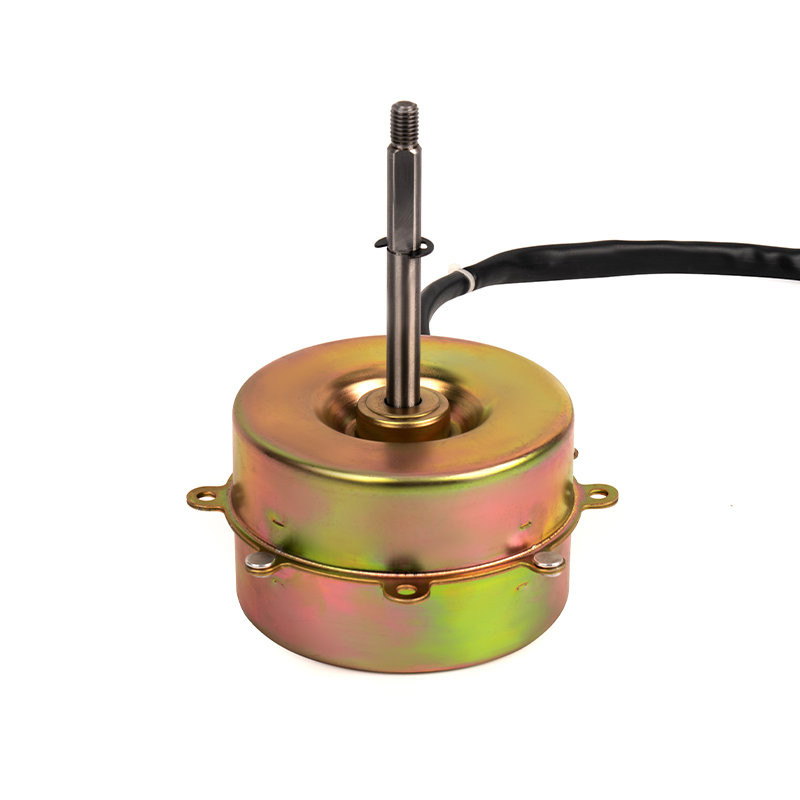
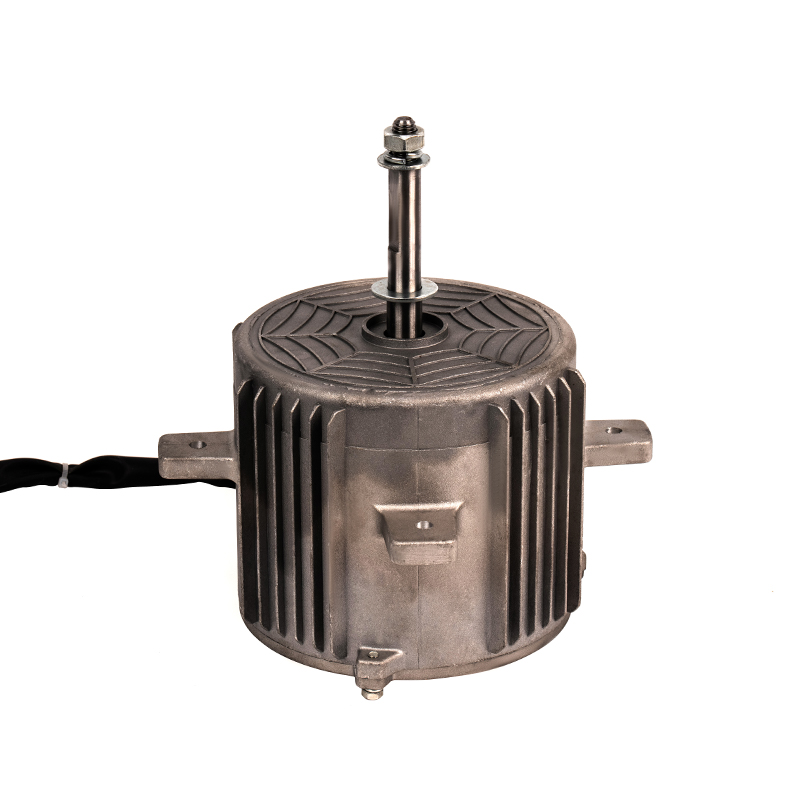
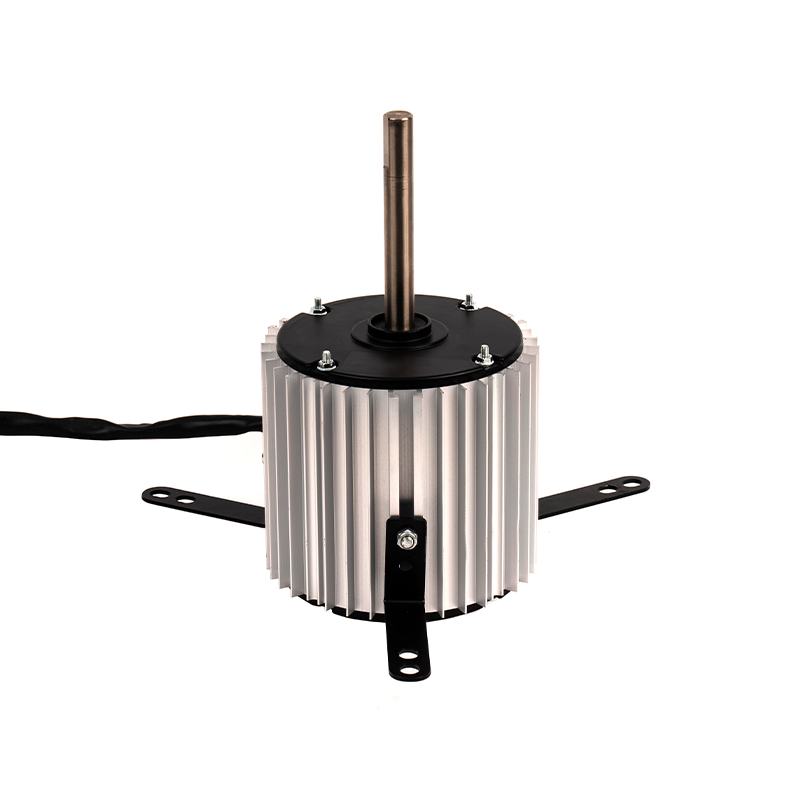
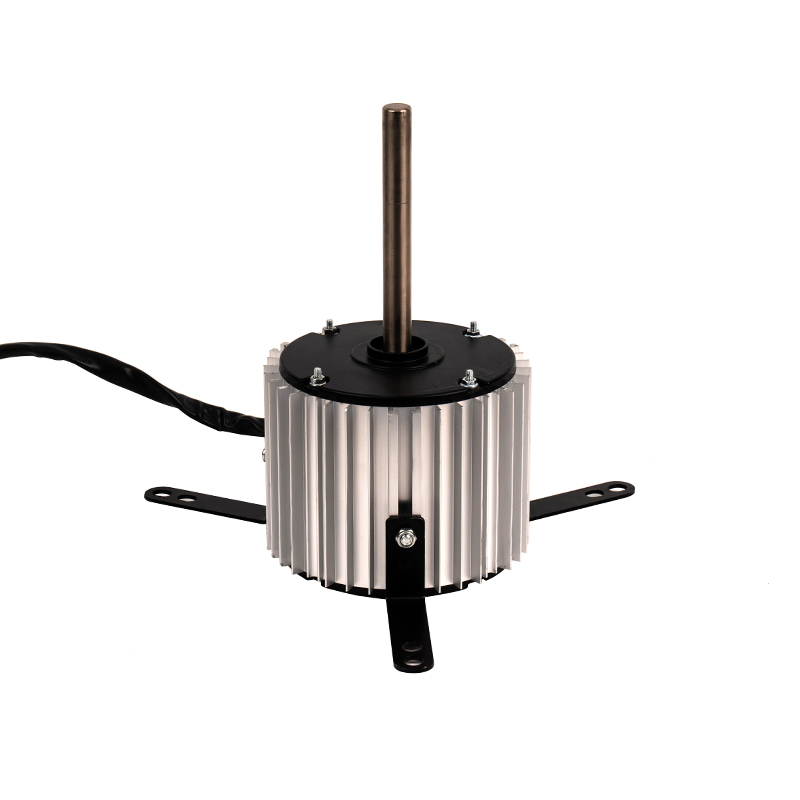
On cold-air fans, housing choice is a real decision rather than a cosmetic one: an aluminium shell sheds heat faster and resists humid-room corrosion better than painted steel at similar cost. The spread of single-phase cold air AC motors across desktop and floor-standing units shows how much of the specification is really about mounting and shaft geometry.
Fan heaters switch to two-pole motors to spin a smaller blower fast, and the binding constraint becomes temperature rather than speed. Insulation class, the position of the thermal fuse and the motor's own cooling path decide whether it survives a blocked grille on a cold morning.
Range hoods sit between capacitor-run AC motors in plastic housings and DC alternatives. Grease, steam and cleaning chemicals punish open frames, so encapsulation earns its cost in years of service rather than in decibels.
Failures, Checks, and What to Ask a Supplier
- Bearings are the usual end-of-life item; noise arrives long before seizure.
- Run capacitors drift in capacitance rather than failing cleanly, so the motor still turns while running hot.
- Winding insulation fails after sustained overtemperature; each 10 °C above rating roughly halves its life.
- Moisture and grease lower insulation resistance; encapsulated plastic motors tolerate washdown far better than open frames.
DangerNever substitute a start capacitor for a run capacitor. Voltage rating and duty differ, and the winding can overheat within minutes on a fan that previously ran for years.
WarningOn heaters, a restricted grille raises air temperature and cuts the mass flow that cools the motor. The thermal protector may trip repeatedly with no fault in the winding at all.
SuccessApprove a sample on evidence, not on a catalogue. Ask for speed and current measured with the real blade, temperature rise at 1.1× rated voltage, locked-rotor current, capacitor value with tolerance, noise at the lowest speed tap, and certificate numbers that match the destination market.
Every practical decision about an AC motor returns to the same picture: a field rotating at synchronous speed, a rotor trailing by a few percent, and torque living in that gap. Rated speed tells you the pole count, the slip tells you the duty, and the capacitor tells you how the motor starts.
Specify speed, slip, temperature rise and starting method together. Judged one at a time, each number looks harmless; judged together, they predict whether the appliance will still be quiet after two summers of daily use.
 ++86 13524608688