

 English
 عربى
عربى-
Capacitor Size and Type
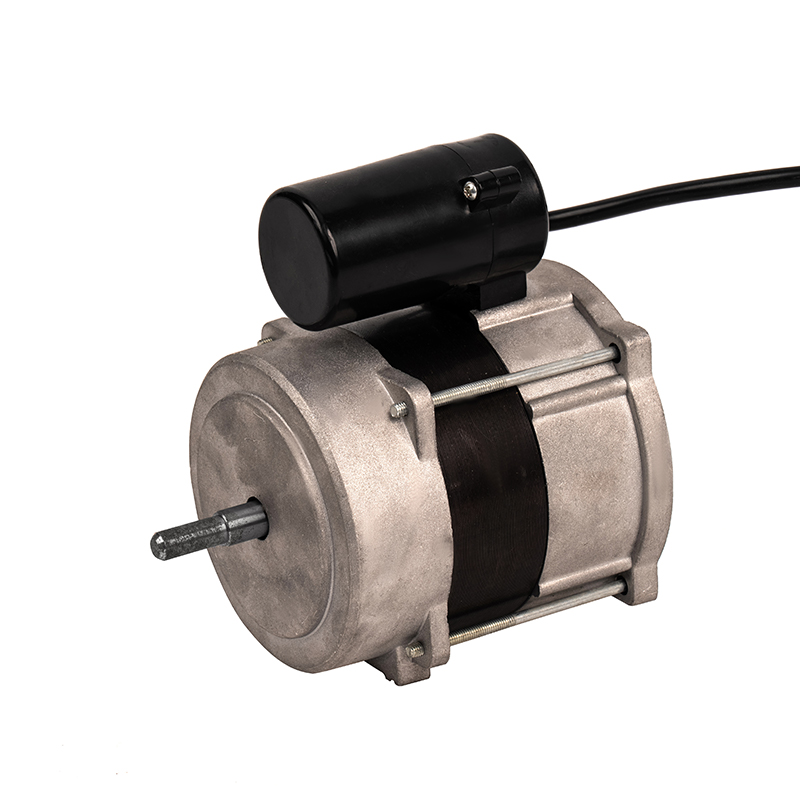
In a capacitor operated one-way motor, the capacitor is fundamental to generating starting torque and enabling consistent rotational speed. The capacitor creates a phase shift between the start winding and the main winding, producing a rotating magnetic field that initiates motion. The size, capacitance value, and type of capacitor directly influence the magnitude of starting torque and the efficiency of energy conversion during operation. Larger or optimally rated capacitors improve phase displacement, producing higher starting torque, smoother acceleration, and the ability to reach higher operational speeds under load. Conversely, a capacitor that is undersized or degraded may reduce starting torque, limit acceleration, and prevent the motor from achieving its rated speed. Additionally, the capacitor type—electrolytic, film, or ceramic—affects voltage handling, ripple current tolerance, thermal stability, and long-term reliability, all of which impact torque output and speed consistency throughout the motor’s operational life.
-
Applied Voltage and Frequency
The operating voltage and supply frequency are critical determinants of both maximum speed and torque. The applied voltage affects the current through the windings, which directly influences the magnetic field strength and torque generation. Operating below the rated voltage reduces torque, slows acceleration, and may prevent the motor from reaching full speed, while excessive voltage can overheat the windings or damage the capacitor. Deviations in frequency, whether from supply instability or intentional variation, can reduce the theoretical maximum speed and may compromise efficiency, requiring careful consideration when designing circuits or selecting the motor for specific applications.
-
Motor Design and Pole Count
The structural design of the motor, including the number of poles, winding configuration, and magnetic circuit, plays a key role in determining speed and torque characteristics. Motors with fewer poles achieve higher synchronous speeds but may deliver lower torque per ampere of current, while motors with more poles operate at lower speed but generate higher torque. Winding configuration, conductor cross-section, and the quality of magnetic materials influence how effectively electrical energy is converted into mechanical torque. Design optimizations that minimize losses, reduce flux leakage, and ensure uniform magnetic field distribution allow the motor to maintain higher operational speeds while delivering consistent torque across a range of loads.
-
Rotor and Stator Construction
The rotor and stator design—including rotor inertia, lamination quality, air gap uniformity, and core material—affects the torque-speed relationship of the motor. A rotor with higher inertia may slow acceleration but can stabilize rotational speed under variable load conditions, while low-inertia rotors accelerate quickly but may be more susceptible to speed fluctuations under load changes. The quality of stator laminations, precise air gap alignment, and efficient magnetic flux paths reduce eddy current and hysteresis losses, maximizing torque output and allowing the motor to reach and maintain its rated speed effectively. Poor construction or imprecise tolerances can lead to uneven torque, vibration, and reduced maximum speed.
-
Load Characteristics
The mechanical load applied to the motor shaft significantly influences maximum speed and torque. Under no-load or light-load conditions, the motor can approach its theoretical maximum speed. Heavy or variable loads increase the torque required to sustain rotation, reducing operational speed and potentially stressing the capacitor and windings. The type of load—constant torque, variable torque, or inertial—affects how the motor responds dynamically. Motors connected to high-inertia loads require more torque to accelerate and may never achieve maximum speed without proper capacitor sizing and voltage management. Understanding load profiles is essential for selecting the correct motor and capacitor combination to meet performance requirements.
-
Temperature and Environmental Conditions
Operating temperature and environmental factors affect motor performance by altering the electrical and mechanical properties of components. Elevated temperatures increase winding resistance, reducing current flow and torque generation. Heat also degrades capacitors over time, reducing phase-shifting effectiveness and lowering both starting and running torque. Excessive humidity, dust, or corrosive atmospheres can further impact insulation, increase friction in bearings, and degrade mechanical components, indirectly affecting speed and torque. Maintaining operation within specified temperature ranges and protecting the motor from environmental stress is crucial for sustaining maximum performance.
-
Friction and Mechanical Losses
Bearings, shaft alignment, couplings, and load interfaces introduce mechanical losses that reduce effective torque and limit maximum operational speed. Friction from poorly lubricated bearings, misaligned shafts, or drag in connected machinery increases the torque required to maintain rotation, thereby decreasing achievable speed. Ensuring precise assembly, proper lubrication, and regular maintenance minimizes mechanical losses, allowing the motor to operate closer to its theoretical torque and speed limits.
 ++86 13524608688