

 English
 عربى
عربىBrushless motor sourcing
High Speed Brushless Motors: the Speed on the Label Is the Easy Part
Torque, thermal margin and bearing life decide whether a fast motor still performs at hour 5,000.
The pattern repeats in appliance sourcing. Two range hood motors arrive with quotations, one listed at 2,400 rpm and the other at 1,100 rpm, and the faster unit looks like the obvious buy. Then the airflow test runs with the impeller, grease filter and duct resistance attached. Measured at that working point, the high speed motor settles at a lower static pressure, runs hotter, and adds a whine that buyers notice in the showroom.
Speed on a datasheet is a starting point, not a result. A high speed brushless motor is worth its price only when it holds the speed your product needs at your load, at your ambient temperature, and across your real duty cycle, and when the bearing system, rotor balance and controller are chosen to survive the speed the label advertises.
Speeds That Matter: Three Numbers Instead of One
A brushless motor is electronically commutated, which means the rotor follows a field the controller creates. It cannot run faster than the voltage and current the drive supplies, and it cannot hold speed without enough torque to push through the load. That is why a single rpm figure describes almost nothing.
| Datasheet figure | What it usually describes | What to verify |
|---|---|---|
| No-load speed | Speed at rated voltage with nothing attached to the shaft. | The speed your impeller reaches once filter, duct and grease screen load is added. |
| Rated speed at rated torque | One point on the speed-torque curve at nominal voltage. | Whether your load line crosses the curve below the continuous thermal limit, not the peak line. |
| Speed control range | Lowest and highest speed the drive software can command. | Usable turn-down: the slowest setting that still starts reliably and does not overheat. |
| Frequency and efficiency | Fundamental frequency and losses at one operating point. | Losses, current and noise across the whole speed range, including the slowest step. |
Mechanical speed also sets electrical frequency. A four-pole motor, which has two pole pairs, turning at 6,000 rpm produces a 200 Hz fundamental. Iron losses, eddy currents and switching losses climb quickly above that, so the controller has to switch well above the fundamental to keep the current waveform clean and the rotor turning smoothly.
Watch out
The slowest setting is often the hottest. Small fan motors cool themselves with the airflow they create, so winding temperature at 300 rpm can be higher than at 1,200 rpm. Verify temperature rise at the lowest commanded speed, not only at rated speed.
Why Brushless Designs Hold Speed Better Than Brushed or Induction Motors
A brushed motor loses speed as load rises because the brush-to-commutator interface adds resistance and sparking, and the brushes wear fastest at high speed, which is exactly where a high speed application needs reliability. A shaded-pole or capacitor-run induction motor slips against synchronous speed, and that slip changes with supply voltage, so a 10 percent voltage sag becomes an airflow sag the customer can hear. A brushless motor sets its speed in the controller, so the same sag shows up as a small droop rather than a stalled impeller.
- No brushes and no commutator, so no carbon dust inside a kitchen hood or an air cooler, and no brush replacement interval to explain in a warranty document.
- Higher efficiency at the working point: a well-matched brushless fan motor typically runs in the 80 to 90 percent band, against roughly 20 to 35 percent for a shaded-pole motor and 40 to 60 percent for a capacitor-run induction motor.
- Electronic speed control, so several speed steps come from one motor without tap windings, gears or a mechanical damper.
- Predictable life, because the failure points move from the brush interface to the bearings, which can be selected and lubricated for the intended service life.
A small brushless motor rarely dies of speed alone. It dies of heat, bearing load and rotor balance, the three things a fast, compact design makes harder to manage.
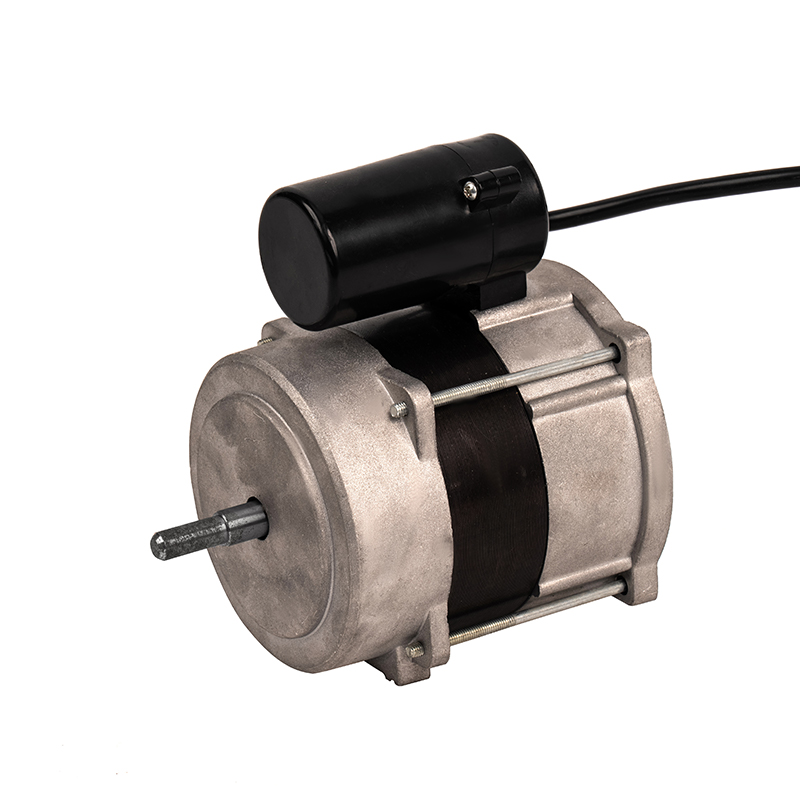
It also helps to sort candidates by working principle before price. The main categories of small electric motors behave very differently once voltage range, duty cycle and start-stop frequency enter the picture.
Sizing a High Speed Brushless Motor for Real Loads
The sequence below prevents most field returns, and it costs a supplier very little to answer.
- Fix the working point first. Write down the speed required with the full load attached, the torque or static pressure at that speed, and the supply voltage range you will accept, including the minus 10 percent worst case.
- Convert speed into electrical frequency. Multiply rpm by the number of pole pairs and divide by 60, then confirm that the proposed controller, switching frequency and sensor scheme can deliver that fundamental efficiently.
- Verify thermal margin, not just temperature rise. Insulation classes such as B at 130 degrees Celsius or F at 155 degrees are limits, not working targets, and bearing grease has its own ceiling.
- Match the mechanical interface. Shaft diameter, runout, end play, mounting stiffness and rotor balance grade often decide noise and bearing life more than the winding design does.
- Validate control and EMC together. A higher switching frequency improves current quality but worsens emissions, and household appliances normally have to meet CISPR 14-1 limits as a complete product.
Note
Name the standards in the purchase specification: IEC 60034-1 for rating and performance, IEC 60034-30-1 efficiency classes for line-fed motors of 0.12 kW and above, UL 1004 for motors sold into North America, and IEC 60335-1 for the appliance itself. A certificate list such as UL, CE, CQC, RoHS or ISO 9001 is a claim to be matched against test reports, not a substitute for your own bench validation.
When a project converts from an induction motor to electronics, comparing frame size, rated speed and control type across an existing DC motor line is usually faster than designing from a blank page.
Range Hoods: Where High Speed Brushless Motors Pay Off First
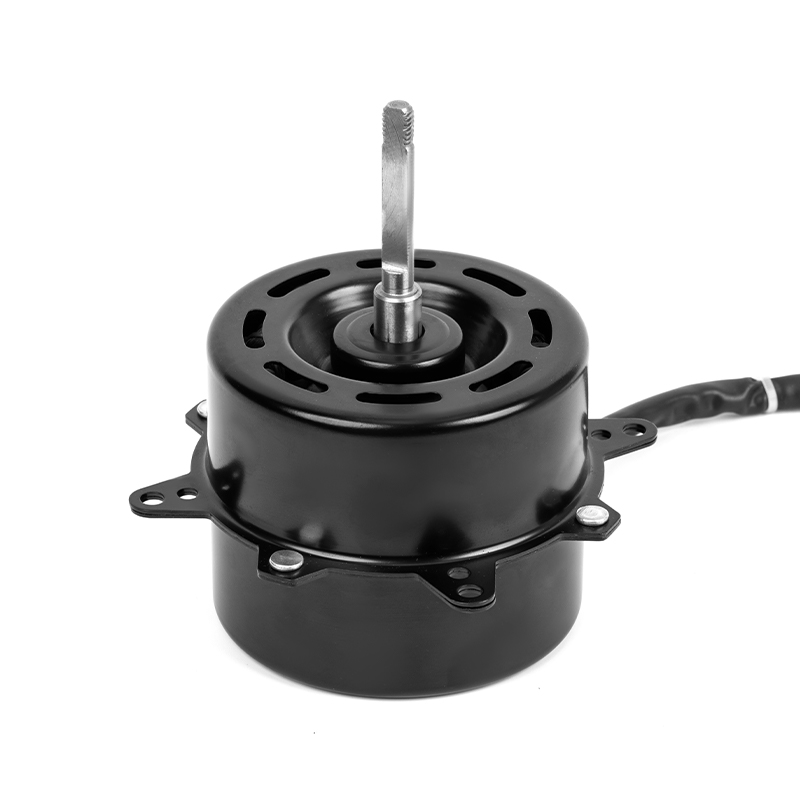
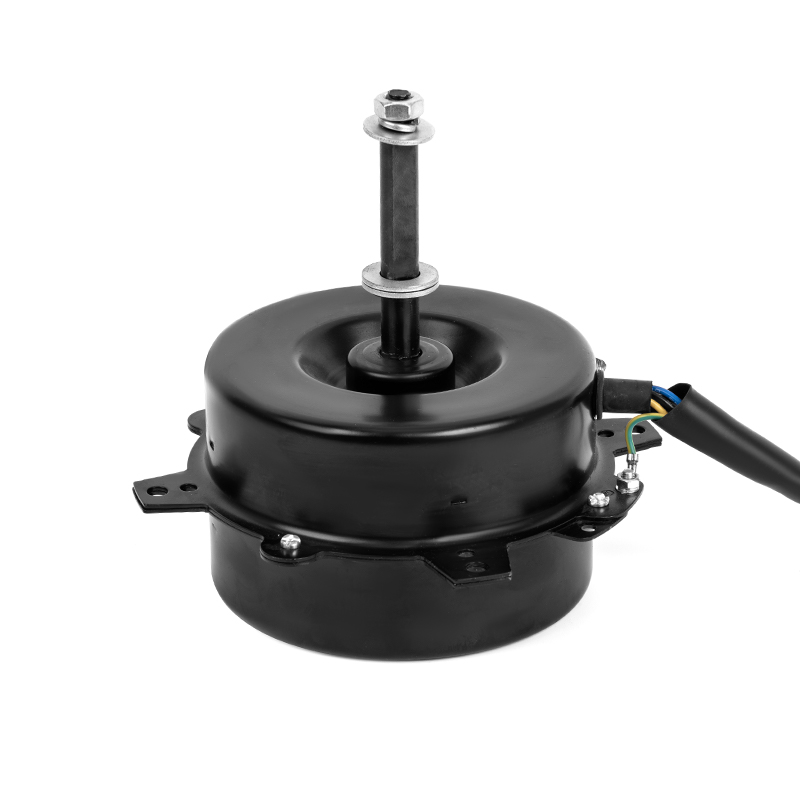
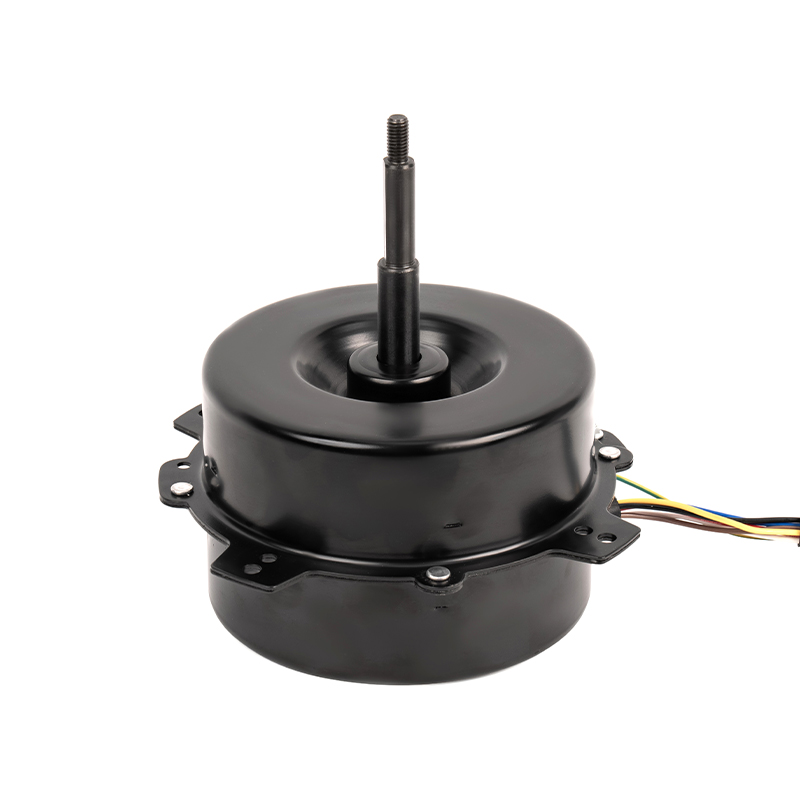
Kitchen exhaust is the clearest case, because one motor has to run quietly at low speed for simmering and push hard at high speed for frying. A brushless range hood motor delivers several speed steps from a single unit and keeps efficiency usable at the low end, where a tapped induction motor tends to be least efficient. It also runs cooler and smaller, which helps slim hoods and lowers the noise floor that customers judge in a showroom.
Expect the impeller to turn at roughly 1,000 to 2,500 rpm in domestic hoods, with the motor shaft running faster on direct-drive designs. Ask for the pressure-volume curve at each speed step rather than a single maximum airflow figure, because duct resistance decides what the customer actually experiences in a real kitchen.
Air Coolers and Evaporative Coolers: Long Hours, Wet Air, Steady Speed
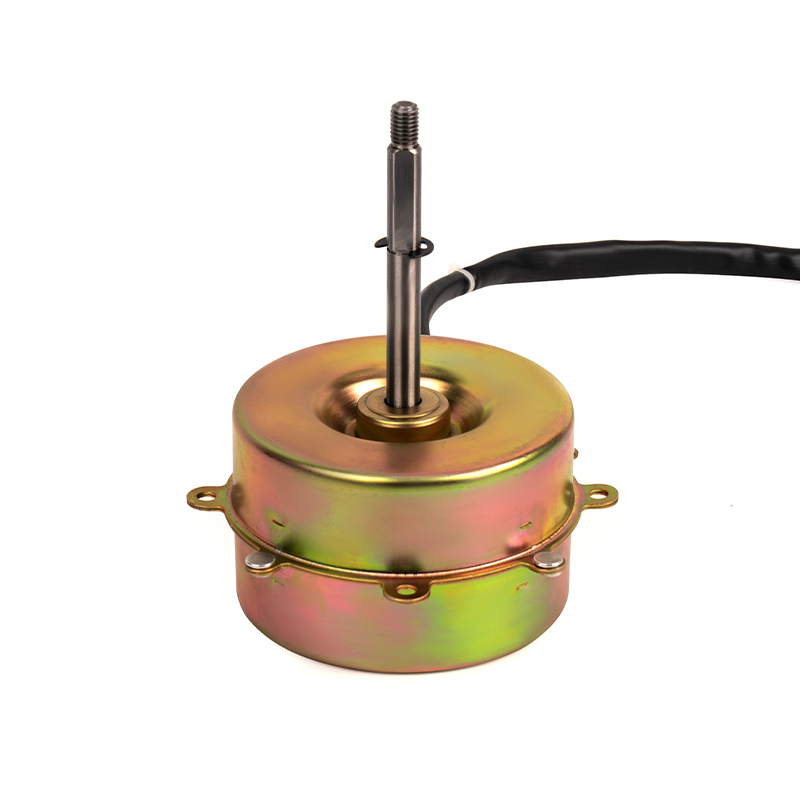
An air cooler runs for hours at a time, often in humid air beside a wet pad. Brushes are a poor match for that environment, since carbon dust and moisture combine badly and brush wear appears as a slow loss of speed that users read as a weak machine. A brushless air cooler motor removes the brush interface altogether, allows stepped or stepless speed control, and keeps airflow steady as line voltage moves through the day.
For this duty, ask about insulation treatment for damp conditions, splash protection on the motor body, and the continuous rather than intermittent rating. A motor rated for short bursts looks attractive on price and disappointing in the field.
What to Validate Before You Commit to a Volume Order
Risk
Never accept a maximum speed without a maximum rating. Over-speed risks rotor burst and bearing damage, and in permanent-magnet designs it risks demagnetisation once the magnet temperature passes its grade limit, typically around 80 degrees Celsius for standard N grades and up to about 150 degrees Celsius for SH grades. Ask for the over-speed test result and the magnet grade in writing.
- Endurance run at worst-case ambient, at both the highest and the lowest commanded speed, for a duration that reflects the product warranty.
- Start-stop cycling at the lowest supply voltage the appliance will ever see.
- Noise measured in dB(A) at one metre at each speed step, not only at maximum.
- Winding and bearing temperatures at the slowest speed, where self-cooling is weakest.
- Protection behaviour: thermal fuse, impedance protection or controller cut-off, and what the appliance does when protection trips.
Good sign
A capable supplier answers these questions with data and sample lead times. Shengzhou Miduo Electric Appliance Co., Ltd., for instance, develops motors from customer drawings or samples, operates its own test laboratory, and states a daily capacity above 80,000 pieces, with CCC/CQC self-declared certification and a published certificate list. Treat those claims as questions to verify during sample approval rather than as conclusions.
High speed brushless motors are not automatically better than the alternatives. They are better when the speed is matched to the load, the thermal margin is checked at the slowest setting as well as the fastest, and the bearing system is chosen for the life of the appliance. Buyers who specify the operating point, demand a curve instead of a peak figure, and test samples at the worst ambient usually end up with a motor that stays quiet, holds its airflow for years, and costs less to own than the cheaper unit it replaced.
 ++86 13524608688