

 English
 عربى
عربىEngineering / Motor Systems
Small Frame, Big Torque: The Case for Gearing Down
A smaller-frame AC motor doesn't have to mean less torque — when paired with the right gear reduction, compact motors routinely outperform larger, ungeared alternatives. Here's the engineering behind why, and how to get the math right.
The Direct Answer
A smaller-frame small AC electric motor can absolutely deliver the torque your application needs, provided you pair it with the correct gear reduction ratio. Torque and motor frame size are not fixed together in a one-to-one relationship. A compact motor spinning at high RPM with relatively low output torque can be run through a gearbox to trade rotational speed for torque, often multiplying the available output torque by a factor of five, ten, or even fifty times, depending on the reduction ratio chosen. This is precisely why small electric motors are found powering everything from garage door openers to industrial conveyor rollers, despite their modest physical footprint.
That said, gearing down is not a universal fix. It works within limits set by the motor's continuous power rating, the gearbox's mechanical efficiency, thermal characteristics, and the duty cycle of your application. Before assuming a smaller motor will solve a torque shortfall, it helps to understand exactly how gear reduction changes the torque equation, what compromises come with it, and when a larger frame size is still the smarter choice.
A physically small motor connected to a well-chosen gearbox can outperform a larger, ungeared motor in torque-critical applications.
How Gear Reduction Multiplies Torque
Electric motors, including compact small 240V electric motors, generate torque as a function of power output and rotational speed. The relationship is straightforward: torque decreases as speed increases for a fixed power output, and vice versa. A gearbox exploits this relationship. By reducing the output shaft speed relative to the motor's input speed, a gearbox increases the torque available at the output shaft, roughly in proportion to the reduction ratio, minus mechanical losses from friction and gear mesh inefficiency.
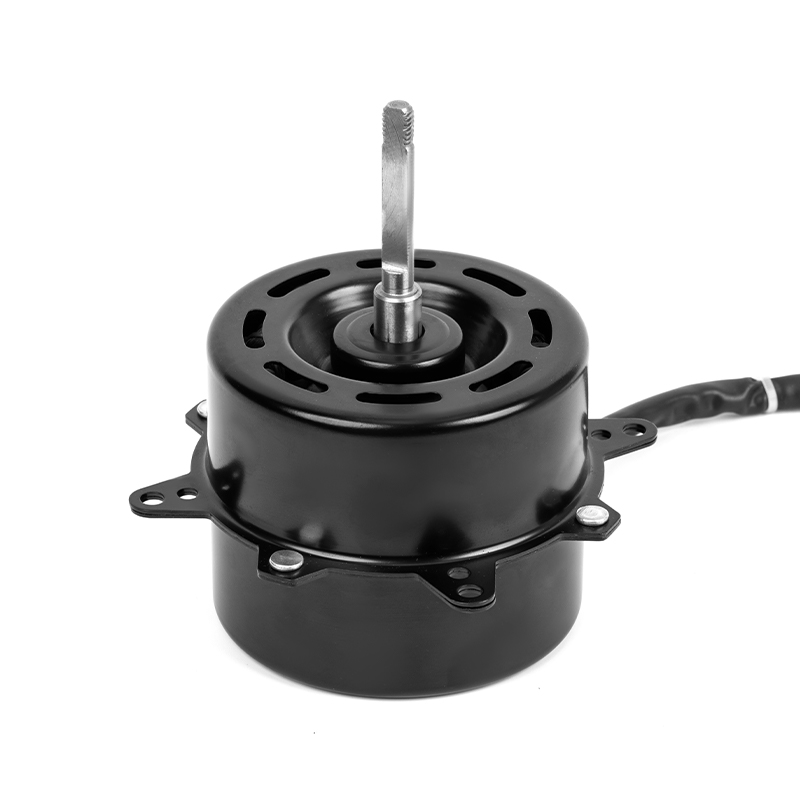
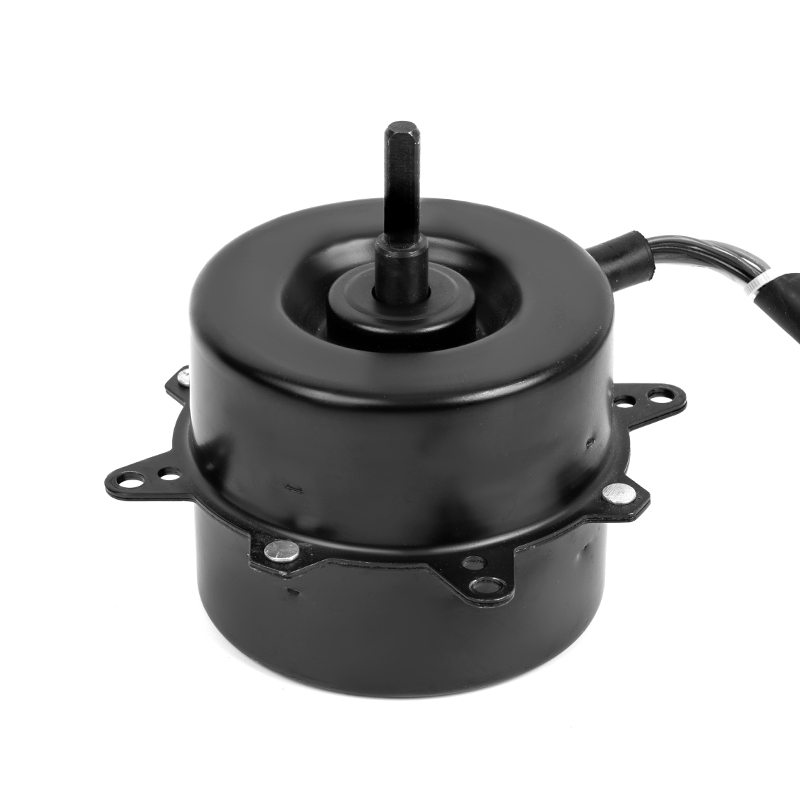
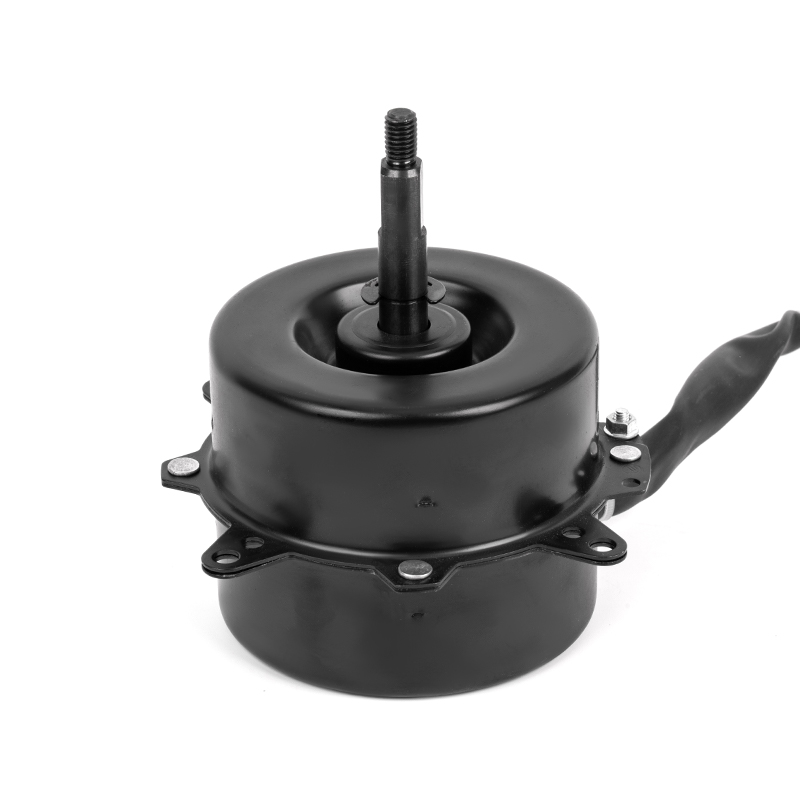
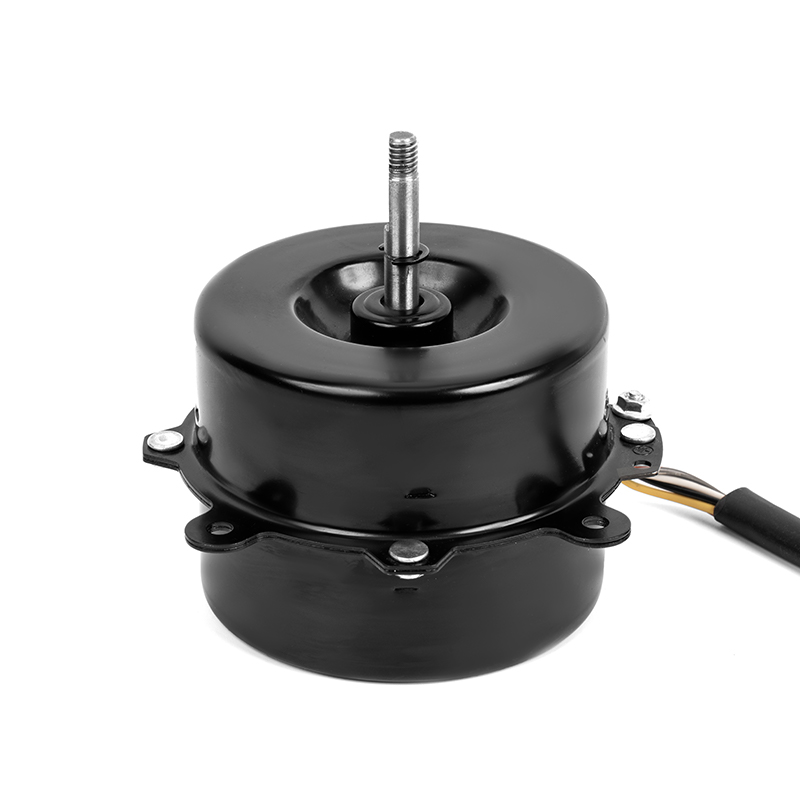
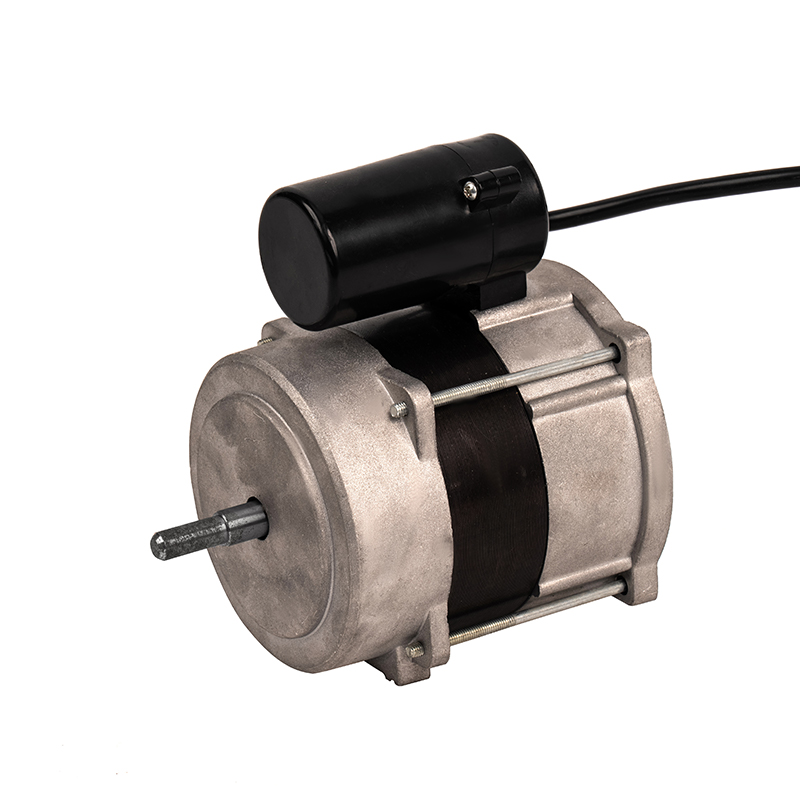
small AC electric motor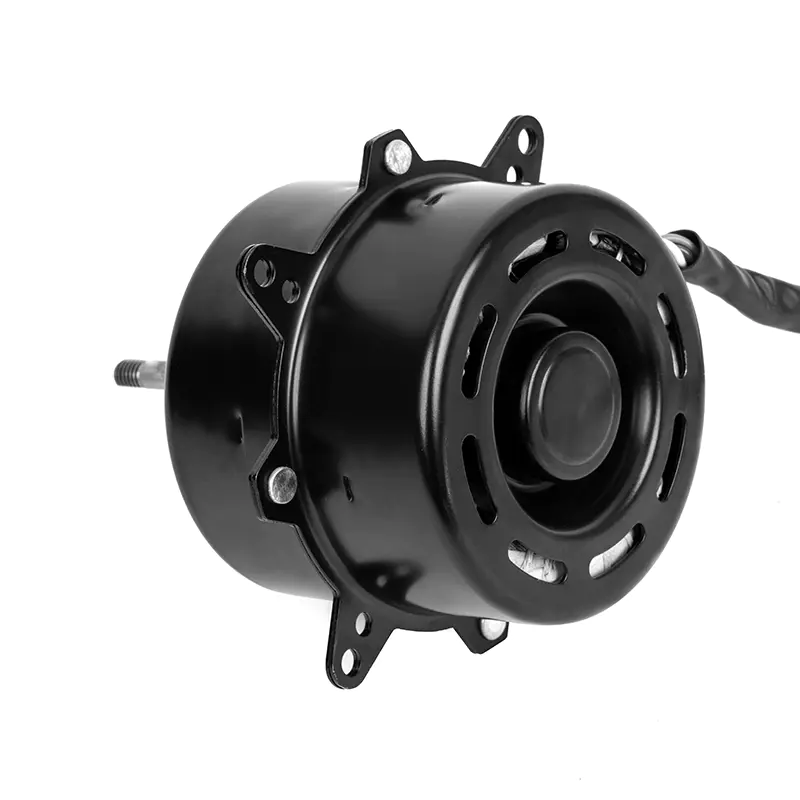
Why This Matters for Frame Size
Motor frame size is largely dictated by the physical space needed to house windings, laminations, and bearings capable of dissipating heat at a given continuous power rating. A smaller frame typically means lower continuous power capacity, but it does not mean the motor cannot produce high torque momentarily or after gear reduction. This is why a physically small motor connected to a well-chosen gearbox can outperform a larger, ungeared motor in torque-critical applications like actuators, small pumps, or indexing tables.
The Math Behind Torque Multiplication
To illustrate how significant the effect of gearing can be, consider a compact motor rated at 1/4 horsepower (about 186 watts) running at 1,725 RPM. Without any gearing, this motor produces roughly 0.75 lb-ft of torque at its rated speed. Once passed through a gearbox, the output torque scales with the reduction ratio, as shown below.
| Gear Ratio | Output Speed (RPM) | Approx. Output Torque (lb-ft) | Efficiency Loss Assumed |
|---|---|---|---|
| 5:1 | 345 | 3.4 | 10% |
| 10:1 | 172.5 | 6.75 | 10% |
| 20:1 | 86.25 | 13.5 | 12% |
| 50:1 | 34.5 | 33.75 | 15% |
As the table shows, a modest 1/4 horsepower motor can produce over 33 lb-ft of torque at a 50:1 ratio, which rivals or exceeds the torque of much larger direct-drive motors running without reduction. This is the core reason gearing down is such a powerful and cost-effective strategy for torque-limited applications.
What You Give Up When You Gear Down
Gearing down is not a free lunch. Several tradeoffs come with using a smaller-frame motor and relying on mechanical reduction instead of a larger, higher-torque motor.
Reduced Output Speed
Every increase in torque through gearing comes at the cost of output speed. If your application requires both high torque and relatively high RPM simultaneously, a small motor with a large reduction ratio will not meet the speed requirement, no matter how much torque it can produce at lower speeds.
Added Mechanical Complexity and Cost
Gearboxes add weight, cost, maintenance requirements, and additional points of failure. Worm gear, planetary, and helical gearboxes each carry different efficiency ratings, typically ranging from 85% to 98%, and this efficiency loss must be factored into your torque calculations.
Thermal Limitations Still Apply
A smaller frame has less surface area and thermal mass to dissipate heat. Even if gearing provides sufficient torque, running a small motor near its continuous duty limit for extended periods can cause overheating, reduced insulation life, or premature bearing failure. This is a critical consideration for continuous-duty industrial use versus intermittent-duty applications like actuators or door openers.
Torque multiplication depends purely on mechanical reduction ratio and gearbox efficiency — not on motor voltage. A 240V motor and a 120V motor of equal power will multiply torque identically through the same gearbox.
When a Smaller-Frame Motor Makes Sense
Choosing a smaller-frame motor with a gearbox instead of a larger, ungeared motor makes the most sense in specific scenarios. Understanding these scenarios helps clarify whether gearing down is the right strategy for your application.
- Space constraints require a compact motor footprint, but the load itself does not need to move quickly.
- The application involves intermittent or low-duty-cycle operation, such as actuators, valves, or positioning mechanisms.
- Budget considerations favor a lower-cost motor combined with an off-the-shelf gearbox rather than a custom high-torque motor.
- The load requires high starting torque but low continuous running torque, which gearing handles efficiently.
- Standard voltage options, including small 240V electric motors, are readily available in the desired frame size, while higher-torque direct-drive alternatives are not.
Matching Small 240V Electric Motors to Gearboxes
Voltage rating does not directly affect torque output, but it does influence current draw, wire sizing, and motor availability in certain frame sizes. Many small 240V electric motors are favored in commercial and light industrial settings because they draw roughly half the current of an equivalent 120V motor for the same power output, allowing for thinner gauge wiring and reduced voltage drop over longer cable runs.
Selecting the Right Gearbox Type
- Worm gearboxes offer high reduction ratios in a compact housing and provide natural back-drive resistance, useful for holding loads in place, though efficiency can be as low as 50–70% at high ratios.
- Planetary gearboxes deliver high torque density with efficiencies typically between 90–98%, making them ideal when minimizing power loss matters.
- Helical or spur gearboxes offer a balance of moderate cost, good efficiency, and smooth operation for general-purpose torque multiplication.
Starting torque requirements — especially for loads with high inertia or static friction — can be significantly higher than running torque. Sizing only for steady-state operation risks stalling or tripping overload protection at startup.
Practical Selection Checklist
Before finalizing a smaller-frame motor and gearbox combination over a larger direct-drive motor, work through the following checklist:
- Calculate the required output torque and speed for your actual load, including any starting torque spikes.
- Confirm the motor's continuous power rating is adequate for the duty cycle, not just the peak torque moment.
- Select a gear ratio that delivers your target torque after accounting for realistic efficiency losses of 10–20%.
- Verify the output shaft speed still meets your application's minimum speed requirement.
- Check that the motor frame size and mounting pattern fit your available installation space.
- Confirm voltage compatibility, particularly if standardizing on small 240V electric motors across your facility.
Common Mistakes to Avoid
Ignoring Continuous vs. Intermittent Duty Ratings
A motor rated for intermittent duty may handle short bursts of high torque through a gearbox but fail quickly if run continuously at that same load. Always match the duty cycle rating to your actual usage pattern.
Overlooking Gearbox Efficiency
Assuming 100% mechanical efficiency when calculating output torque is a common error. Real-world gearboxes lose anywhere from 2% to 50% of input power depending on design, so always use the manufacturer's efficiency rating in your calculations.
Undersizing for Starting Torque
Starting torque requirements, especially for loads with high inertia or static friction, can be significantly higher than running torque. A motor and gearbox combination sized only for steady-state operation may stall or trip overload protection at startup.
Never assume a gearbox eliminates thermal risk. A motor running near its continuous duty limit will still overheat regardless of how much torque the gearbox delivers downstream.
Real-World Example Scenarios
The table below outlines common applications where a compact small AC electric motor paired with an appropriate gearbox successfully replaces a larger direct-drive alternative.
| Application | Typical Motor Size | Gear Ratio Range | Reason for Gearing |
|---|---|---|---|
| Gate or door actuator | 1/8 – 1/2 HP | 30:1 – 100:1 | High holding torque, low speed needed |
| Small conveyor drive | 1/4 – 1 HP | 10:1 – 30:1 | Consistent torque at moderate speed |
| Indexing or positioning table | 1/6 – 1/2 HP | 20:1 – 60:1 | Precision movement, high torque bursts |
| Small mixing equipment | 1/3 – 1 HP | 5:1 – 15:1 | Overcoming viscous load resistance |
When space, budget, and duty cycle line up, a small geared motor isn't a compromise — it's the correctly engineered solution.
Final Recommendation
A smaller-frame motor geared down is often the more practical and cost-effective solution when space is limited, budgets are tight, and the application does not demand simultaneously high speed and high torque. The key is doing the math correctly: calculate required output torque and speed, select a gear ratio that accounts for realistic mechanical efficiency losses, and confirm the motor's continuous duty rating matches your actual usage pattern rather than just the peak torque moment. Whether you are selecting a compact motor for an actuator, sourcing dependable small 240V electric motors for a facility retrofit, or specifying a drive system for light industrial equipment, gearing down is a proven, well-understood engineering strategy — not a compromise — when applied with the right calculations and component selection.
 ++86 13524608688